Blog
Fleet Maintenance for Waste Fleets: Keeping Every Truck on the Route
by Luke Van Engen • July 30, 2026
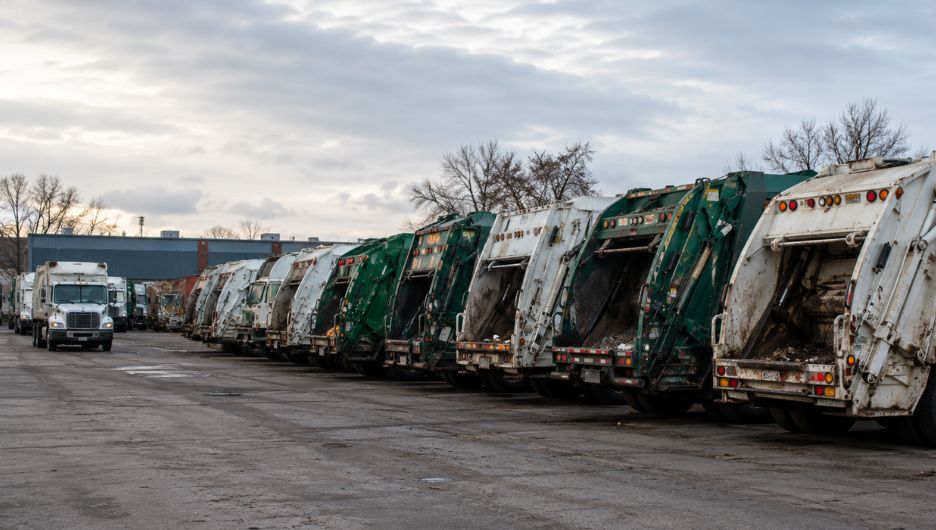
Few vehicles work harder than a waste collection truck. It runs stop-and-go all day, carries heavy and shifting loads, and cycles hydraulics, lifters, and compaction equipment thousands of times a shift. That workload wears down a truck down quickly and unevenly, and when a vehicle fails midway through a route, the cost is never just the repair bill. It is the stranded load, the unserved stops, the go-backs the next day, and the last-minute scramble to finish a route with fewer trucks.
That is what makes fleet maintenance so consequential in waste collection. In a lighter operation, a truck out of service is an inconvenience. In collection, where routes are tightly sequenced and every vehicle has an assigned workload, one breakdown can disrupt the whole day. Preventative fleet maintenance is what keeps that from happening by catching a developing problem while the vehicle is still in the yard, turning a driver’s inspection into a repair that actually gets done, and giving the maintenance team a clear picture of what needs attention rather than a pile of paperwork and second-hand reports.
Key Takeaways
- Fleet maintenance keeps waste vehicles running by catching mechanical problems early and turning inspections into tracked, resolved repairs.
- A digital inspection can automatically flag a maintenance issue the moment a driver marks a defect, so nothing depends on paperwork reaching the right person.
- Supervisors manage each issue through a clear lifecycle, from open to closed, with a record of what was found and what was done.
- Preventive fleet maintenance reaches beyond the shop: telematics, driver coaching, and efficient routing all reduce wear before a repair is ever needed.
Why Fleet Maintenance Is Harder for a Waste Fleet
Maintaining a collection fleet is a different problem from maintaining most commercial vehicles, and naming the difference explains what good fleet maintenance actually has to do.
The vehicles themselves take punishment that ordinary trucks never see. Constant stop-start driving is hard on brakes and drivetrains. Heavy, uneven loads strain suspension and tires. The hydraulics, packer blades, and lifting equipment that make a collection truck useful are also complex systems that wear and fail in ways a simple cargo vehicle does not. A small fault, a slow hydraulic leak, a failing sensor, a brake wearing past tolerance, can develop into a mid-route failure faster than it would on a vehicle living an easier life.
The operational stakes are higher too. A collection route is a tightly sequenced plan built around a specific number of trucks. When one goes down, the loss is not contained to that vehicle. Its stops go unserved, which generates go-backs and resident complaints, and the work has to be redistributed across a fleet that was already fully committed. Fleet maintenance in this setting is not only about extending the life of an asset. It is about protecting the reliability of the service itself, which is why catching problems early matters so much more here than in a fleet with slack to absorb a surprise.
The Weak Link in Most Maintenance Programs
Ask where fleet maintenance breaks down, and the answer is usually the same place: the handoff between the driver who spots a problem and the technician who fixes it.
In many operations that handoff is manual and fragile. A driver runs a pre-trip or post-trip inspection, notes a defect on a paper sheet, and then the fate of that finding depends on the paper reaching the yard, someone reading it, and someone else acting on it before the truck rolls again. Any break in that chain and the defect goes unaddressed. A problem flagged on Monday morning becomes a roadside breakdown on Thursday afternoon, and no one can say exactly where the note got lost. The inspection was done correctly. The system around it simply failed to carry the information forward.
That gap is expensive precisely because it is invisible. Nothing looks wrong until a truck is on the shoulder with a load still aboard. Closing the gap is the single highest-value thing a fleet maintenance program can do, and it is where connecting the inspection directly to the maintenance process changes the outcome.
Turning a Driver’s Inspection Into a Tracked Repair
The most effective fleet maintenance workflow removes the manual handoff entirely by linking the inspection to the maintenance queue automatically. In Routeware SmartCity, when a driver marks an item as bad during a pre-trip or post-trip inspection in the cab, the system creates a maintenance issue on its own and surfaces it to supervisors. There is no separate report to file and no paper to lose. The moment the problem is identified in the cab, the back office already has visibility into it.
From there, the issue follows a clear lifecycle. It is created automatically, held as pending while it is being addressed, and marked closed once the work is done, with the option to require a note at each status change so there is a record of what was found and how it was resolved. Supervisors can work through flagged issues from wherever they are already looking, filtering to a specific vehicle to open its inspection view, or working through a vehicle’s inspection log directly. Either way, the maintenance team operates from one current list of everything outstanding rather than reconstructing the day from scattered forms.
The effect is a maintenance program with no cracks for a defect to slip through. Every problem a driver reports becomes a tracked item that stays visible until someone resolves it, which is exactly the accountability a busy fleet needs. This inspection-driven view also connects to the wider picture a team gets from fleet reporting, where the same vehicle and inspection data rolls up into an overall read on fleet health.
Why the Digital Inspection Is the Foundation
Because the entire workflow starts with the inspection, the inspection itself has to be more than a formality. Replacing paper pre-trip and post-trip checklists with a digital, DOT-compliant electronic DVIR does two jobs for maintenance at once.
It creates a clean, time-stamped record of every inspection, the date, time, location, mileage, and the driver’s own comments, which becomes both a compliance document and a running maintenance history for each vehicle. Over time that history is valuable in its own right, showing which trucks generate recurring issues and where a pattern is forming before it becomes a failure. And it makes the driver’s finding immediately actionable, because a defect marked in the app becomes a maintenance issue automatically rather than a handwritten note that has to be transcribed, routed, and remembered. The inspection stops being a box a driver ticks and becomes the daily front line of the maintenance program, the mechanism that surfaces problems while they are still small and cheap to fix.
Fleet Maintenance That Prevents Problems, Not Just Fixes Them
The strongest fleet maintenance programs do more than resolve reported defects quickly. They reduce the wear that creates defects in the first place, and much of that work happens away from the shop.
Telematics and engine diagnostics: Integrating vehicle telematic and engine data means a developing mechanical issue can appear as a fault code well before it strands a truck. That early signal lets a team schedule a repair into a planned window instead of absorbing an unplanned breakdown mid-route, which is almost always the more expensive and disruptive option.
Driver coaching: How a vehicle is driven shapes how quickly it wears. Personalized driver performance data, and video where it is available, help address habits like harsh braking and hard acceleration that grind through brakes, tires, and drivetrains. Better driving is a quiet but real form of preventive maintenance, and coaching from a driver’s own data changes behavior more effectively than a general policy ever will.
Efficient routing: Every unnecessary mile is wear the fleet did not need to take on. Route optimization through Routeware EasyRoute designs efficient routes and sequencing that lower total mileage, which directly reduces the wear a fleet accumulates over time. Fewer miles and smoother sequencing mean less strain on every vehicle and less demand on the shop down the line.
Together these shift fleet maintenance from a reactive function that waits for something to break into a preventive one that works on the causes of wear. The reported-defect workflow catches what does go wrong. Telematics, coaching, and routing reduce how often anything goes wrong at all.
One Connected System Behind the Whole Program
Fleet maintenance runs best when the pieces are not stitched together from separate tools but belong to one connected system. When the inspection app, the maintenance workflow, the telematics feed, and the routing all share the same platform, a driver’s flagged defect flows straight into the maintenance queue, and the vehicle data behind every decision is the same data running the rest of the operation. Turning the workflow on is a small configuration step, and once active it works alongside the vehicle notifications and inspection setup a fleet already uses.
Fleet maintenance is part of the broader Routeware platform, delivered across the SmartCity and Elements suite for governments and haulers, with software, hardware, and support from a single vendor. That single-source approach lets an operation start with the essentials and add capabilities as needs grow, without forcing tools that were never designed to work together to somehow cooperate. For a maintenance team, the payoff is straightforward: less time chasing paper and reconciling systems, and more trucks where they belong, on the route.
Frequently Asked Questions
Fleet maintenance is the practice of keeping collection vehicles safe and running through inspections, repairs, and preventive measures. It is especially demanding in waste because heavy loads, constant stop-start driving, and hydraulic equipment wear vehicles quickly, so catching problems early is essential to keeping trucks on the route.
When a driver marks a defect during a digital pre-trip or post-trip inspection, the system can automatically create a maintenance issue for a supervisor to review. This removes the delay and lost paperwork of manual processes, so a reported problem is tracked from the moment it is found until it is resolved.
Each flagged issue follows a clear lifecycle, created automatically, held as pending while it is worked, and marked closed once resolved, with notes recording what was found and done. Supervisors can review issues by vehicle or through the inspection log, giving them one current view of everything outstanding.
Preventive fleet maintenance is the work that reduces wear and catches problems before a breakdown, rather than only repairing failures after they happen. It includes using telematics to spot fault codes early, coaching drivers to reduce wear-heavy habits, and optimizing routes to cut unnecessary mileage.
Efficient routing reduces total mileage and smooths vehicle sequencing, which lowers the wear a fleet accumulates. Fewer unnecessary miles mean less strain on brakes, tires, and drivetrains, and less frequent maintenance over the working life of each vehicle.
About the Author

Luke Van Engen
Luke Van Engen is the Director of Demand Generation at Routeware, where he focuses on helping waste and recycling organizations connect with the technology and information they need to serve their communities more effectively. His background in B2B technology marketing gives him a practical perspective on the challenges facing waste haulers, municipalities, and public works teams.
 North America
  United Kingdom