Blog
How AI Dash Cams Help Waste Fleets Coach Drivers and Defend Claims
by Luke Van Engen • November 12, 2026
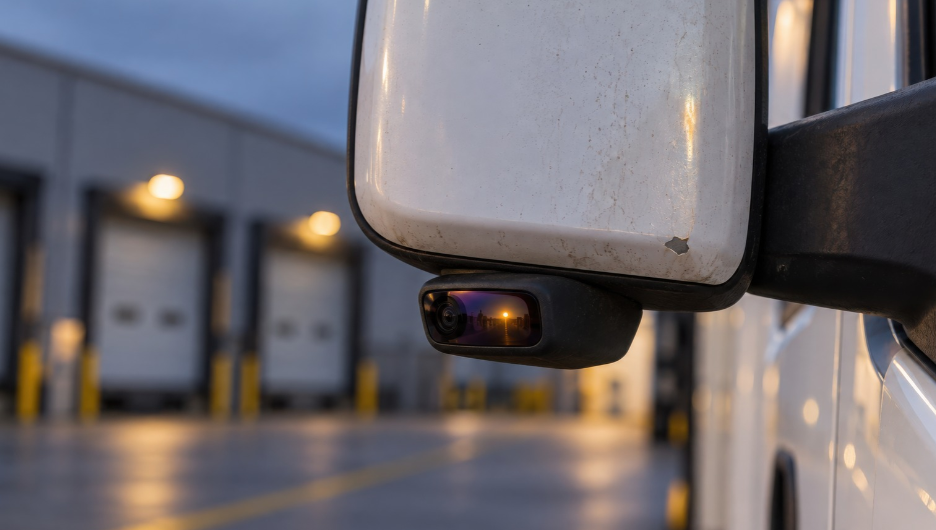
Garbage trucks operate in a unique environment that most large commercial vehicles avoid altogether: stopping and starting hundreds of times on residential streets, navigating parked cars, children walking to school, and residents backing out of driveways. Sometimes things go wrong, and when it does, the hauler will be asked to prove what happened, often weeks after the incident occurred.
An AI dash cam addresses both sides of that problem. It flags risky driving as it happens, so a safety manager can coach on real events before they become accidents. It also captures video footage that can help resolve disputed claims. For a waste fleet, the payoff comes from using both: fewer incidents, and a defensible record when one happens anyway.
Key Takeaways
- An AI dash cam on a garbage truck watches the road and the driver, flags risky driving such as distraction, following too closely and rolling stops, and saves the clip for review.
- Waste collection ranks among the most dangerous jobs in the United States, which makes driver safety a cost, claims and retention issue for every hauler.
- Coaching on real flagged events gives safety managers specific moments to review with drivers, so risky habits get corrected before they turn into accidents.
- Video evidence helps close disputed claims, and Routeware customers running on-board video see a 25% reduction in accident-related expenses.
What Is an AI Dash Cam on a Garbage Truck?
An AI dash cam is a vehicle camera with software that analyzes the video as the truck drives. On a garbage truck, that usually means a road-facing camera that sees the street ahead, the parked cars and the people walking past, and a driver-facing camera that shows where the driver’s attention is at each moment. The AI watches both views for risky behavior and flags each one with the clip attached.
How is that different from a conventional dash cam? A standard camera still records everything, but requires someone to manually find the right timestamp after an incident. An AI dash cam does that automatically. A safety manager sees the handful of important moments that actually matter from each shift without watching hours of footage, which is what makes regular coaching practical across a fleet of collection trucks.
For waste fleets, where drivers make hundreds of stops each day in busy residential areas, this visibility is particularly valuable. AI dash cams help safety managers identify risky behaviors before they lead to accidents.
Why Do Waste Fleets Need AI Dash Cams?
Waste collection is an inherently dangerous job. Refuse and recyclable material collectors had one of the highest fatality rates of any civilian occupation in the United States in 2024, according to SWANA, which tracks the Bureau of Labor Statistics data for the industry. The risk reaches beyond the crew to the residents, pedestrians and other drivers who share the street with the truck.
Every accident brings some mix of injury, vehicle damage, downtime and a claim, and as anyone managing an organization’s finances knows, those costs land on an already tight operating budget. Accidents also affect the hardest resource to replace: experienced drivers. An operation with a poor safety record will struggle to keep good drivers, and every new driver needs to be hired and trained before routes run smoothly again.
For waste fleets, AI dash cams are more than a way to document accidents after they happen. They are a proactive safety tool that helps identify risky behaviors early, giving managers an opportunity to intervene before those behaviors lead to costly incidents. The result is a safer operation, with video evidence available when claims do arise.
What Does an AI Dash Cam Detect on a Collection Route?
AI dash cams detect risky driving, which can include distractions, following too closely, or rolling stops. Each of those carries a specific risk on a collection route, and each gives a safety manager something concrete to act on.
| AI dash cam event | Why it matters on a collection route | How a safety manager uses it |
|---|---|---|
| Distraction | Eyes off the road on residential streets with pedestrians, parked cars and children nearby | Reviews the clip with the driver and agrees on habits that keep attention on the road between stops |
| Following too closely | A loaded refuse truck needs far more distance to stop than the cars around it | Shows the driver the clip and the stopping distance involved, then watches whether the pattern repeats |
| Rolling stops | A route crosses many intersections a day in neighborhoods with foot traffic | Coaches full stops at intersections and tracks whether events fall over the following weeks |
How Do AI Dash Cams Change Driver Coaching?
Without an AI dash cam, most safety coaching happens after something goes wrong. A driver has an accident, the supervisor reviews whatever footage exists, and the conversation is about an event that has already cost money and, sometimes, injury. With AI dash cams, safety managers can coach drivers on real events before an incident forces the conversation.
That makes coaching specific. A safety manager can sit down with a driver, play a short clip and talk about the following distance on one street, which lands better than a general reminder in a monthly safety meeting. It also makes coaching more consistent, because the same criteria applies for every driver, and the conversation are grounded in actual events.
Across a fleet, these events can reveal braoder safety trends: routes with more frequent rolling stops, a shift with higher rates of distracted driving, a new driver who needs more training. For regional or executive leadership, this visibility helps identify the risks in the business, prioritize training resources, and address safety issues before they become costly incidents.
How Does AI Dash Cam Video Help Defend Claims?
Weeks later, the claim arrives. When a claim is disputed, video is often the deciding evidence. A resident says the truck clipped a parked car; the driver says they pulled out without looking. With road-facing and driver-facing footage, the hauler can show what happened, and when the driver is not responsible, the claim can be closed with the evidence in hand.
Routeware customers using its on-board video technology see a 25% reduction in accident-related expenses. For drivers, having video evidence that can establish they were not at fault is another important benefit, and a major reason many support the program.
How Do You Win Driver Trust With AI Dash Cams?
Drivers often push back on a driver-facing camera, and the concern is reasonable. Nobody wants to feel like they are being watched for an entire shift, and a camera rollout that ignores that concern can damage trust. In fact, losing even one experienced driver over a badly handled rollout can end up costing more than the cameras save in a year.
A successful rollout leads with the protection benefits first. Show drivers how video exonerates them in disputed claims, explain which events are flagged and why, and draw a clear line between footage used for coaching and footage used for discipline. Drivers who already rely on in-cab technology for routes and service verification have seen how a tool in the cab can make the job easier, and the same approach applies here: involve drivers early and keep the promises made.
How Do AI Dash Cams Fit Into a Waste Operation’s Systems?
Many haulers already run telematics on their trucks, so an AI dash cam usually arrives through a provider the fleet knows. Routeware works with telematics providers including Samsara and Geotab, and camera and telematics data can be tied together through those integrations. The capability flows into the Routeware platform customers already use, so safety data sits alongside the routes and service the operation already runs.
The curb-facing side of a camera program connects in the same way. Garbage truck cameras with AI contamination detection identify non-recyclables at the curb, and each detection also flows into the Routeware platform.
What Should Leadership Expect from a Year of Coaching?
When the cameras are first introduced, safety managers may see more flagged events than anyone predicted. That’s not necessarily a sign of worsening safety. It’s an indication that risky behaviors that previously went unnoticed are now being identified and addressed through coaching.
If coaching is working, the results should become apparent within a few months. Routes and drivers receiving the most attention should begin showing fewer risky driving events, while new drivers can receive additional support early in their training. Driver acceptance should also improve as they see how video footage can protect them when accidents or disputed claims occur.
Over time, those improvements should translate into fewer preventable accidents and lower associated costs. And when a disputed claim does arise, having clear video evidence can make the difference between a lengthy investigation and a quick resolution.
Frequently Asked Questions
About the Author

Luke Van Engen
Luke Van Engen is the Director of Demand Generation at Routeware, where he focuses on helping waste and recycling organizations connect with the technology and information they need to serve their communities more effectively. His background in B2B technology marketing gives him a practical perspective on the challenges facing waste haulers, municipalities, and public works teams.
 North America
 United Kingdom