Blog
British Columbia Just Mandated Dashcams for Commercial Fleets. Here’s What It Means for Waste and Public Works Operations
by Shahbaz Hussain • July 23, 2026
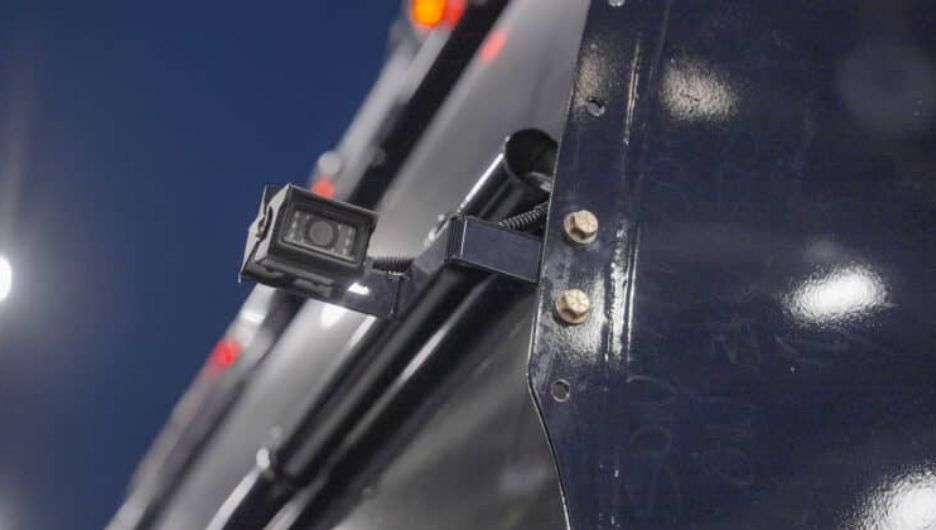
Somewhere in a fleet yard in Kamloops or Surrey right now, a public works manager is looking at a refuse truck, a street sweeper, or a plow, and wondering whether it needs a dashcam. As of May 2026, the answer is very likely yes.
British Columbia has become the first province in Canada to mandate dashcams on commercial vehicles. Bill M217, the Dashboard Cameras in Commercial Vehicles Act, passed the B.C. Legislature with unanimous, bipartisan support after MLA Ward Stamer introduced it in response to fatal highway collisions involving commercial trucks. Once the bill receives Royal Assent, fleets have six months to get compliant dashcams installed and running on every vehicle the law covers.
Who’s on the hook
The bill applies to “commercial vehicles” as defined under B.C.’s Commercial Transport Act; any vehicle with a licensed gross vehicle weight over 11,793 kilograms used to transport goods for hire, plus National Safety Code carriers operating under a B.C. carrier license. For municipal and hauler fleets, that scope is broad: refuse trucks, street sweepers, and many public works vehicles fall well within it. Leased vehicles aren’t exempt; the lessee takes on the compliance obligation; and neither are out-of-province fleets simply passing through B.C.
What counts as compliant
The law itself is hardware-neutral, but the proposed technical baseline is specific: a forward-facing camera only (inward-facing driver cameras aren’t required and raise separate privacy questions under B.C.’s Personal Information Protection Act), minimum 1080p resolution, at least 72 hours of stored footage, night vision, and a requirement that the camera stay unobstructed at all times during operation.
Fines and enforcement mechanisms haven’t been finalized. That falls to B.C.’s Commercial Vehicle Safety and Enforcement (CVSE) branch, which already has authority to inspect vehicles and issue penalties under the Commercial Transport Act. Regulators expect enforcement details within six months to a year of Royal Assent.
Six months disappears fast
Six months sounds like room to breathe, but procurement, installation scheduling, and driver training all take longer than expected, especially once every fleet in the province is trying to book installs at the same time. Fleets that start evaluating hardware now, rather than waiting for the final regulations, will have far more options.
Compliance is the floor, not the strategy
A 72-hour, forward-facing dashcam satisfies the letter of Bill M217. It doesn’t do much for a fleet manager trying to resolve a contamination dispute, defend a claim after a low-speed collision on a residential collection route, or coach a driver before a near-miss becomes an incident. That takes footage tied to real fleet data, vehicle speed, location, route, so an event is understood in context, not just recorded in isolation.
Choose your camera, keep your data connected
This is where a second, quieter challenge emerges. If a camera system can’t share what it captures with the rest of your fleet software, someone on your team ends up doing the connecting by hand: pulling clips from one login, pulling GPS and speed data from another, and lining them up after the fact, at the moment of an urgent incident review. Routeware’s SmartCity solution is built to address this challenge.
Routeware has a seamless camera integration that brings together the benefits of real-time visibility in and around the cab with critical back office data and reporting. For those not yet using cameras, it is a simple all-in-one solution. For those already using Samsara and Geotab, but not yet benefiting from the SmartCity routing, dispatch, and customer service functionalities, Routeware’s platform integrates easily with these camera systems. The goal is straightforward: customers should be able to run whatever camera fits their fleet and their budget and still get one unified view of vehicle, driver, and video data inside Routeware, instead of toggling between platforms every time an event needs review.
For fleets already using on-truck camera systems, meeting Bill M217 doesn’t mean starting over. It means confirming the current setup meets the 1080p, 72-hour, night-vision baseline, and making sure that footage is actually flowing into the real-time, operational picture Routeware already provides. For fleets still shopping, it means choosing hardware based on fit for the vehicle and the route, not on which system happens to integrate with the software already in place.
What to do before the clock starts
Waiting for Royal Assent to start planning is the riskiest option on the table. Fleets operating in or through B.C. should audit vehicles cross the 11,793-kilogram threshold, check whatever cameras are already installed against the proposed spec, and talk to their camera and fleet management providers now about lead times.
Bill M217 creates a baseline for what B.C. expects from commercial fleets. What a fleet does with the camera once it’s installed, and how well that footage connects to everything else it already knows about its vehicles, is still up to the fleet – and a great opportunity for cost savings and efficiency gains. Bill M217 is the moment to reevaluate and future-proof fleet camera capabilities.
Routeware SmartCity enables municipalities of all sizes to leverage the power of digitization and real-time data to the benefit of public works managers, drivers, residents, and even adjacent municipal departments. The integrated SmartCity software platform brings together routing, dispatch, in cab tools, fleet reporting, and customer service solutions, replacing customers’ varied systems and unique data sets with an all-in-one user experience. Learn more here.
About the Author

Shahbaz Hussain
Shahbaz Hussain is an Account Executive at Routeware, helping Canadian municipalities adopt digital solutions for waste, recycling, fleet operations, and resident engagement. Based in Ontario, he works with municipal teams to align their operational challenges with technology that improves route visibility, service delivery, and public communication. He brings over 10 years of sales experience, including 7+ years in North American SaaS sales focused on complex public-sector and enterprise accounts.
 North America
  United Kingdom