Blog
Why Multi-Family Residents Recycle Less — And What Actually Helps
by Aidan McLennan • June 29, 2026
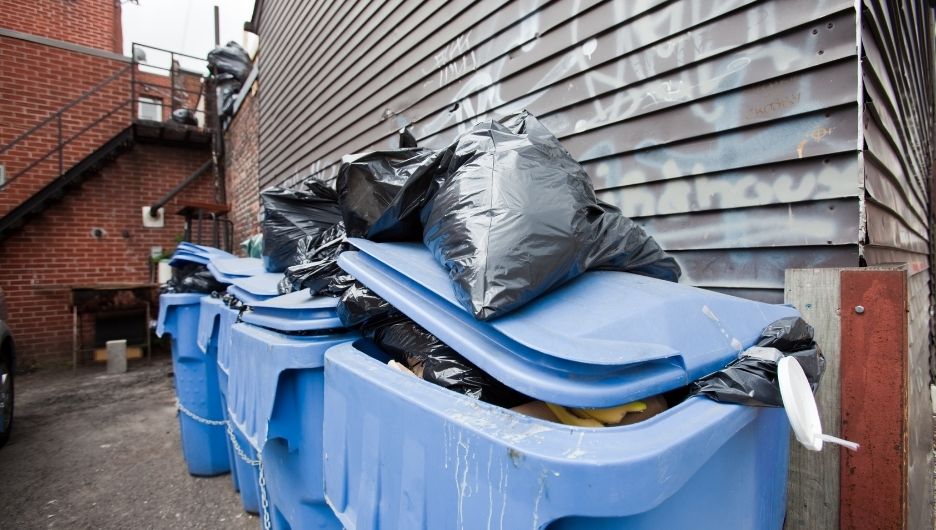
If you manage a recycling and organics program for a municipality or regional district, you already know the score. Single-family residents are diverting waste at roughly twice the rate of their apartment-dwelling neighbours. It’s a gap that has persisted for decades — not because residents don’t care, but because the system makes it harder for them to act.
Data published in May 2026 by Metro Vancouver Regional District put the contrast in sharp relief: single-family homes achieve recycling and composting rates of 60 to 65 percent. Multi-family buildings? Just 30 to 35 percent. Apartment residents also generate about 1.3 times more overall waste than their single-family counterparts.
This isn’t a values problem. It’s a friction and information problem — which means it’s one that communities can solve.
Why Apartments Are a Different Animal
In a single-family home, recycling infrastructure is personal and visible. Bins sit outside the door. Collection day is a built-in reminder. The process is habitual and largely individual.
In an apartment, nearly everything is shared and removed from the unit. Residents may carry their compost, recyclables, and garbage across a hallway, through a lobby, down an elevator, past a parking level, and into a shared waste room — just to sort materials they’re not sure they’re sorting correctly. That’s a lot of steps between intention and action.
There are structural gaps too. Many municipalities don’t offer the same collection programs for multi-family buildings as they do for single-family homes, which limits what residents even have access to. Limited in-unit storage makes sorting and holding materials less practical. And without a direct communication channel to residents, information about what goes where — or what’s changed — often doesn’t reach the people who need it.
When residents don’t know, they guess. Guesses become contamination. Contamination undermines program economics and discourages the residents who are trying to do it right.
Three Audiences, One Program
One reason multi-family programs stall is that they try to solve a tenant problem without engaging the people who control the building environment. A successful multi-family program needs buy-in from three distinct stakeholders — and each one needs a different pitch.
- Property owners respond to economics. A smaller garbage stream means smaller bins and less-frequent tipping — which translates directly into lower hauling costs. Framing recycling as a cost reduction, not just a civic duty, tends to move the needle.
- Property managers think about tenant retention and building appeal. A functional recycling program is a legitimate amenity — something they can lead with when attracting new tenants and point to when current tenants ask for improvements.
- Tenants generally want to participate. The barrier is almost never motivation — it’s access and clarity. Make recycling easy to understand and convenient to act on, and participation tends to follow.
What Moves the Needle
Communities that have improved multi-family diversion rates tend to have a few things in common: they’ve made the physical act of recycling easier, they’ve made the information clearer, and they’ve found ways to bring residents along as participants rather than just recipients of a service.
On the physical side, improvements to shared waste rooms — better lighting, clearer signage, intuitive graphics showing which materials go where — have a measurable impact. Vancouver-area zero-waste ambassador Jennifer Danczak described how adding a simple stainless-steel table to her building’s recycling room made it easier for residents to set items down and sort them properly. Small changes to the space reduce the gross-out factor and lower the activation energy for residents who are on the fence.
Zero-waste ambassador programs take a similar approach at the human level. Training a small number of engaged residents to share recycling information with their neighbours — in their own building, in their own language — dramatically shortens the distance between a municipal program and the people it’s meant to serve. Regional districts like Metro Vancouver have pointed to this model as one of their most promising strategies for multi-family improvement.
The clearest information gap in multi-family housing is sorting knowledge: residents genuinely don’t know what goes where, and they don’t have an easy way to find out. Digital tools that let residents search for specific items and get location-specific answers — like the Waste Wizard — address this directly and at scale, without requiring any ongoing staff time to field those questions. And because sorting errors follow predictable patterns, tools like the Waste Sorting Game can reveal exactly where a building’s residents are getting it wrong, giving program managers a clear target for their next outreach campaign.
The broader principle is convenience. Residents who described successful recycling habits in the Metro Vancouver study weren’t necessarily more motivated than those who didn’t — they just had a clearer path to follow. Recycling information that lives on a resident’s phone, in a program-branded app that reflects their physical building and material streams, meets them where they already are. It removes one more reason to guess, defer, or give up.
The Gap Is Closeable
Multi-family recycling has lagged behind single-family programs for a long time — not because the problem is intractable, but because the programs haven’t been designed with the specific realities of apartment living in mind. Treating multi-family as a lower-effort version of a single-family program is the core mistake.
The communities seeing real diversion improvements are the ones that have committed to understanding their multi-family context specifically: the buildings with the worst performance, the stakeholders with the most leverage, and the information gaps causing the most contamination. They engage property owners and managers as partners, give tenants the tools and knowledge to participate confidently, and treat the recycling room as part of the program — not an afterthought.
The gap between 35 percent and 65 percent isn’t destiny. It’s a design problem.
—
ReCollect’s resident education and outreach tools — including the Waste Wizard, Waste Sorting Game, and custom mobile app — are built to help municipalities close the multi-family diversion gap through better information and smarter engagement. Learn more about how ReCollect supports multi-family programs at the link.
About the Author

Aidan McLennan
Aidan McLennan is the Senior Demand Generation Manager at Routeware, where he focuses on connecting waste management and fleet operations professionals with insights that help them modernize their operations. With a background spanning content strategy, ABM, and marketing operations in B2B SaaS, he writes about the intersection of technology, efficiency, and the infrastructure that keeps communities running. Based in Simcoe County, Ontario, he sees firsthand how the services Routeware supports shape the places people actually live.
 North America
  United Kingdom