Blog
Fleet Maintenance Software: Building a Program That Keeps Waste Trucks on the Route
by Katie Kinnear • September 11, 2026
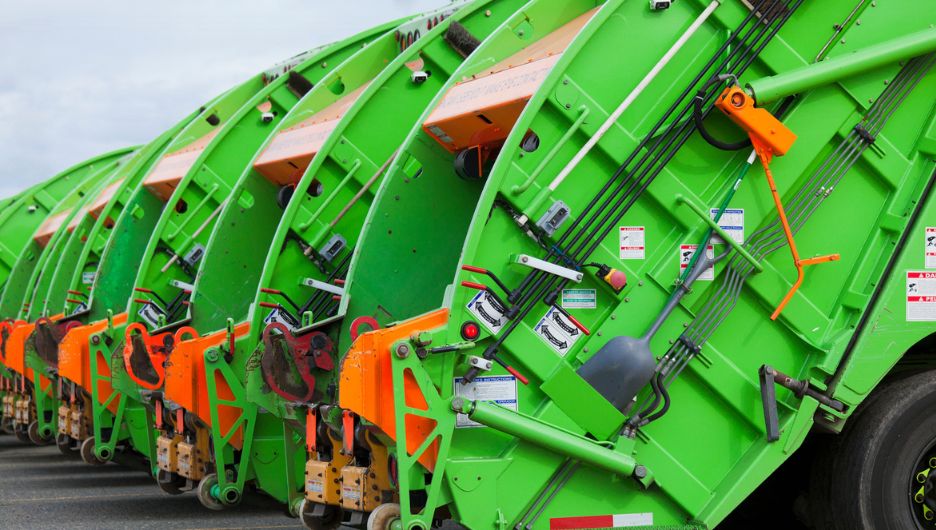
A truck in the shop is not on its route. And a route that doesn’t run turns into missed pickups, phone calls, and costs the operation didn’t plan for. That is the problem a fleet maintenance program exists to prevent: keeping trucks healthy and on the road so the day goes as scheduled. In waste, it is a hard problem, harder than most fleets deal with. A collection truck cycles its hydraulics and lifters thousands of times per route, hauls heavy loads that shift around, and runs stop-and-go all day. That kind of use wears a truck down fast, and unevenly.
Operations that stay ahead of maintenance don’t wait for trucks to break. They run a preventive program instead, one that catches wear before it becomes a failure, plans the repair for a time that suits the operation instead of the truck, and leans on data to decide when a vehicle should be serviced, watched, or pulled from the fleet. Fleet maintenance software is what makes a program like that work at any scale. It takes inspection records, telematics, and each truck’s history and turns them into something that keeps trucks available and keeps maintenance costs in check. That is a different job from fixing what breaks, and the difference is where a more cost effective, more reliable fleet starts.
Key Takeaways
- Preventive beats reactive. A real program catches wear before it strands a truck, instead of waiting for the breakdown.
- The cost that hurts is downtime, not the repair bill. A truck in the shop is a route you have to cover.
- Fault codes let you book a repair on your schedule, before it quits mid-route.
- A truck’s maintenance history turns a hunch about a problem vehicle into a case you can defend for pulling it.
Reactive Repair Versus a Real Maintenance Program
The difference between reacting and preventing is critical, and most operations sit somewhere between the two. A reactive shop fixes trucks when they break. Something fails, the truck comes off its route, everybody scrambles, and the operation eats the disruption. Trucks do get fixed, so it works well enough. But it means your fleet’s availability is decided by its failures, which is an expensive way to run and impossible to predict.
A preventive program flips that around. It services trucks on a plan, before wear becomes a breakdown, and it puts the work into windows the operation picks instead of the ones a failure force on you. Two things come out of that. Trucks stay available, and costs stop surprising you. You strand fewer trucks on route, you pay for fewer rush repairs and rentals, and you get more working years out of each vehicle before it goes. The operations furthest down this road take it one more step, into predictive maintenance, where the data off the truck decides when it needs the shop, not a date on a calendar. Software is what moves an operation along, away from reacting and toward planning, and eventually toward seeing a failure coming. On the reactive side, from a driver’s flagged defect to a tracked repair, our guide to fleet maintenance for waste fleets walks through that workflow. This piece is about the preventive program you build around it.
Why Downtime Is the Number That Matters
If you want to justify a maintenance program, you must be straight about what poor maintenance costs, and the repair bill is the small part. The high cost is downtime. In an operation that lives and dies by its routes, a truck out of service is not just a repair. It is a route somebody must cover, shuffle, or drop.
Watch what happens when a truck goes down mid-route. The load might be stuck on it. The stops it did not reach turn into go-backs. The work lands on a shift that was already full, so now you are paying overtime or renting a truck to catch up. The residents who got skipped call in, and service reliability, which is what a waste operation gets judged on in the end, takes the hit. Line all that up against the cost of just preventing the breakdown, and it is not close. A preventive program spends a known, controlled amount up front to avoid a much bigger and far less predictable bill later. Controlled spend now instead of chaos later. That is the real argument for a maintenance program, and it is why the number to watch is uptime, not the repair invoice.
Scheduling Around How Waste Trucks Wear
A preventive program is only as good as the schedule under it, and waste trucks do not wear the way a calendar or an odometer would have you believe. The parts that work hardest on a refuse truck, the hydraulics, the packer, the lift arms, the power take-off, wear from use, not from distance. So, a truck grinding through a dense residential route with a thousand lifts a day is aging far faster than one running long gaps between stops, even if the odometers read the same.
That is the case for scheduling on usage rather than miles. Engine hours and cycle counts on the hardest-worked systems tell you more about wear than distance ever will, and a schedule built on them catches problems a mileage interval sails right past. This is where waste equipment is its own animal. The things that fail hard on a collection truck are usually the hydraulic and lifting systems, and a generic vehicle-maintenance schedule barely looks at them. A program built for waste is built around how these trucks are used, so service intervals track real strain instead of a one-size-fits-all clock that leaves the busiest parts underserved.
Catching Problems Before the Route Does
The best thing a modern maintenance program does is let you see trouble coming before it strands a truck, and that comes straight off the vehicle’s own data. Instead of finding out about a fault when the truck quits halfway through a route, you can catch the signal while it is still running fine.
Pull the telematics in, and you get a full read on how the fleet is running, with fleet reporting that watches the fault codes as they come off each truck. A code pointing at something building, a heat trend, a hydraulic pressure reading drifting, a battery on its way out, gets flagged and booked into the shop on your terms, not the truck’s. That one change, from finding the problem at the roadside to catching it in the yard, is the whole difference between a repair you slotted into a slow afternoon and an emergency that leaves a load stranded and blows up the day. Early detection off the data is what nudges a preventive program toward predictive, servicing a truck right when its own numbers say it needs it, which is cheaper and a lot less disruptive than the alternative.
The Inspection Is the Daily Front Line
The data monitoring does not replace the walk-around; it runs on it. The driver circling the truck every morning is the program’s most reliable early warning. A preventive program treats that inspection as a real front line, not a box to tick, and digitally recording details from the walk-around makeswhat the driver sees truly valuable.
Swap the paper checklist for a DOT-compliant electronic DVIR, and you get two things at once. One, a clean time-stamped record of every pre-trip and post-trip check, the date, the location, the mileage, the driver’s own notes. Two, a finding you can act on, so a defect a driver flags becomes a job the shop picks up instead of a scrap of paper lost between the cab and the yard. Stack those records up over months, and each truck has a running history, and that history is where the program gets smart. It shows you which trucks throw the same problems again and again, and where a pattern is building before it turns into a failure on the road.
Using the Data to Decide What to Fix, Watch, and Retire
A mature program does more than keep trucks running. It feeds the biggest calls an operation makes about its fleet, and that only works if the maintenance activity turns into data a manager can use. Records nobody looks at don’t improve anything, so reporting is what separates a program that plans from one that reacts.
Where it earns, its keep is the asset decisions. When you can pull up a clean history and cost picture for a truck, you can tell a bad month apart from a truck that has become a money pit, and you can make the case to pull it from rotation with a paper trail instead of a mechanic’s gut feel. Tag the equipment and keep a live inventory, and that visibility runs across the whole fleet, so nothing goes untracked. This is the data behind the questions that keep a fleet manager up: which trucks cost the most to keep alive, where the repeat problems cluster, and when a truck has crossed the line where replacing it beats repairing it again. A program that hands you that turns fleet decisions from a guess into a call you can defend.
What a Waste Fleet Maintenance Program Needs
| Fleet maintenance software capability | What it delivers | What to ask |
|---|---|---|
| Preventive scheduling | Service before failure, planned into chosen windows | Is maintenance planned around usage, or triggered by breakdowns? |
| Usage-based intervals | Intervals set by engine hours and cycles, not just miles | Do schedules reflect how hard each truck actually works? |
| Telematics and fault codes | Developing issues flagged early and booked into the shop | Do you see a fault before the truck stalls on route? |
| Digital inspections | DOT-compliant DVIR and a running maintenance history | Are driver findings actionable, or lost on paper? |
| Asset tracking | A live inventory of every tagged vehicle and asset | Can you account for every asset and its status today? |
| Maintenance reporting | Cost and history per vehicle to guide repair or replacement | Can you prove which truck should come out of rotation? |
No operation needs all of this at the same strength on day one. A shop that keeps getting blindsided by trucks dying on route should start with telematics and usage-based scheduling, since that turns a roadside breakdown into a planned shop visit. An operation whose trucks are getting old and expensive has a different priority, the maintenance history and cost reporting that tell you which vehicle to replace and when. Figure out which problem is costing you and start there.
Building the Program on a System Built for Waste
A program works when the pieces read from the same information, when the inspection the driver files, the fault codes off the truck, and each vehicle’s history all talk to each other instead of sitting in separate places. That shared base lets an operation move from reacting to planning, and over time to predicting.
Routeware SmartCity and Elements give municipal and hauler fleets that base, with electronic DVIR, real-time automated fleet reporting, telematics and fault-code integration, and asset tracking that together hand a fleet the data a preventive program runs on. The platform holds the inspection records, diagnostic signals, and maintenance history that let a fleet catch wear early, plan repairs on its own schedule, and make retire-or-keep calls based on evidence instead of instinct. For an operation trying to keep more trucks on the road more of the time, that is where it starts.
Frequently Asked Questions
It is the system an operation uses to keep its vehicles healthy and available, usually covering digital inspections, maintenance history, telematics and fault-code monitoring, and asset tracking. In waste, it is built around the heavy, high-cycle use that wears collection trucks fast, and it supports a preventive program that cuts downtime.
Reactive maintenance fixes trucks after they break, so the fleet’s availability rides on its failures. Preventive maintenance services them on a plan before wear becomes a breakdown, in windows the operation picks. It cuts downtime, controls cost, and extends vehicle life, and predictive maintenance goes further by servicing a truck when its own data says so.
Because a truck out of service means missed pickups, go-backs, reshuffled routes, and often overtime or a rental, plus the hit to service reliability. Those costs usually run past the repair bill itself, which is why a preventive program is measured on downtime avoided, not repair cost.
A refuse truck’s hardest-working parts, hydraulics, packers, lift arms, and the power take-off, wear from use, not distance. Two trucks with the same mileage can wear very differently depending on how many lifts and cycles they run. Scheduling on engine hours and cycle counts catches what a mileage schedule misses.
It lets an operation see a mechanical issue building while the truck is still running, instead of when it dies on route. The repair gets booked into the shop on the operation’s terms, turning a potential mid-route breakdown into a planned job that reduces both downtime and cost.
About the Author

Katie Kinnear
Katie Kinnear is Director of Brand Strategy at Routeware, where she leads brand, messaging, events, and communications efforts across the company’s full product suite. A 2024 Waste360 40 Under 40 honoree, she is passionate about advancing meaningful dialogue around circular solutions, smart city technology, and the future of waste and recycling. Katie serves on the boards of the Utah Recycling Alliance and Recycle Utah, extending her commitment to sustainability beyond the workplace and into her community.
 North America
  United Kingdom