Blog
How Roll-Off Haulers Run a Profitable Construction Waste Operation
by Joel Scott • September 14, 2026
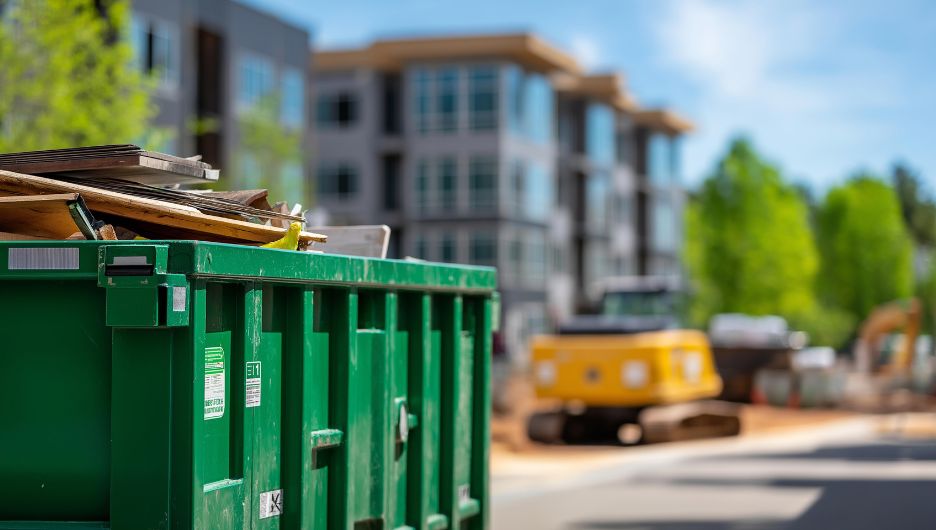
Construction waste is not only one of the most profitable operations for a hauler, but also one of the easiest to run poorly. A roll-off box is sent to a job site today, stays there for a number of days which cannot be predicted, is then exchanged when the contractor phones up at 7 a.m., taken to a disposal facility, weighed and charged for on a ton-by-ton basis, after which the entire process is carried out again at the next site. There is no set weekly route or regular schedule, merely heavy loads, the moving of containers, and contractors who need a box on site before their workforce arrives.
This is separate from collecting goods for residential or commercial use, and it suits operators who use equipment designed specifically for this work. The profit in construction and demolition (C&D) waste removal comes down to details such as which container is at each site, how long it has been unpaid for, whether the load was weighed and charged correctly, and if you can show what happened when a contractor questions a fee. Here’s how operators who run a profitable C&D operation handle the most important parts.
Key Takeaways
- Construction waste hauling is built around non-linear, on-call jobs. This means delivering the waste, parking, exchanging equipment, hauling it, and returning, instead of following a set weekly route. As a result, it needs multi-step work-order dispatching.
- Because revenue is directly lost when tonnage is not billed, accurate weight capture and proper tonnage billing become essential to profitability, since weight varies by material type.
- Containers left on construction sites after their rental period quietly and continuously cause loss. This only becomes clear with asset tracking and demurrage rules.
- C&D diversion rules require haulers to show where they separate and dump materials. Digital manifests and audit trails are now part of daily operations.
What Makes Construction Waste Different from Standard Routes
C&D is different from regular waste collection. Residential routes follow the same sequence every week, but construction waste jobs are unpredictable. Each container is delivered to a site, filled over an unknown number of days, swapped or dumped when requested, and finally picked up. Systems designed for this treat the container as an asset with a location and a status, not just a point on a map.
If you add to what makes C&D unique the fact that heavy loads are weighed and charged according to their weight, that the type of material affects the cost of disposal, that job sites are dynamic and present access problems, and that contractors place urgent orders, then you have an operation which needs its own method. The purpose of this article is aimed at the operator who runs such a business, at the roll-off hauler and the C&D operator, not at the contractor who manages waste on their own site. For haulers, getting the following points right is what makes a roll-off operation profitable rather than one that slowly loses money.
On-Call, Multi-Step Jobs
A roll-off job involves more than a single step; it is a series of actions: delivering the container, leaving it there, exchanging it when it is full, removing it for disposal, and then either bringing it back or taking it away permanently. Each stage is a separate operation, and the contractor can visit at any time to rearrange the day’s orders. This non-linear, on-call nature is something a fixed-route planner can’t manage; as a result, drivers must call the office to work out their next move, and orders get delayed.
A system designed for multi-step roll-off operations can resolve this issue. If a work order guides the driver through each stage in real time and a dispatcher can reassign or resequence the job as needed, the operation no longer relies on phone calls or memory. Effective dispatching for roll-off operations ensures drivers continue through the delivery-swap-haul-return sequence without contacting the office at each stage.
Containers Sitting on Job Sites
The problem with containers at a site applies here too: a box can remain on a job for weeks, and if it isn’t tracked against the rental agreement, those extra days will not be billed. In a busy operation involving containers at dozens of active sites, boxes that stay for an extended period represent a constant, invisible loss of revenue – money that has been earned but never charged.
Keeping each container accounted for under its rental terms closes that gap. Once the system records how long a box has been at a customer’s site, it can identify containers kept for an extended period and automatically initiate recurring rental charges, ensuring demurrage is billed rather than overlooked. It is the fleet and equipment reporting, which displays each container according to its location and status, that transforms a dispersed fleet into rental days that can be collected.
Heavy Loads and Tonnage Billing
This is the stage where a C&D operation either makes or loses its margin, and it differs most from normal collection. Construction loads are heavy and specific to the material, unlike household waste. One job alone could involve filling boxes with concrete, roofing material, soil, rock, timber, or general rubble, and disposal sites charge by weight, with the material type as the main cost factor. If a load is dispatched without being weighed accurately, or if a heavy box is charged a fixed rate, the unrecorded weight is revenue permanently lost.
Doing it properly means linking the operation to the scale. If field operations connect directly to the scale systems at landfills and transfer stations and record the gross, tare, and net weights, then the weight shown on the ticket will match the invoice. Once this is achieved, billing, which deals with the classification of C&D materials and separates out the charges for delivery, haul, and over-tonnage, makes sure that every chargeable pound and any extra service is included on the bill. In a business where one overweight load can eliminate a job’s margin, accurate weight recording is essential; it’s the difference between a line item that is heavy on tonnage and one that gradually loses money.
Job-Site Access and Proof of Service
Construction site conditions can lead to fees and disputes. For example, a driver may find themselves facing a blocked container, a gate they can’t pass, or a crate containing contaminated or hazardous material that was never approved. Without a record, the office loses the argument, cancels the extra charge, and absorbs the damage claim.
Adding evidence to the cab finalizes the situation. If drivers can take timestamped, geotagged photos of a blocked box, an overloaded container, or unauthorized materials, the operation has the proof it needs to charge the customer and protect against a damage claim. Job site placement notes and the site superintendent’s contact details, both available in the in-cab app, help the driver get it right the first time. In the case of construction and development work, it is that photograph of an unauthorized load that protects you from getting rid of hazardous material for which you had not been paid.
Contractor Self-Service Ordering
Contractor orders are a separate type of administrative task. A project manager usually needs a box by a certain date, plus a liability waiver to sign and payment to make before delivery; when this is handled by phone, it creates a series of back-and-forth communications that tie up the office.
A self-service portal for roll-off containers lets a contractor request a container, choose its size, set delivery and removal dates, sign an electronic liability waiver, and pay in advance. The order then passes on to dispatch together with all its details and the payment. For one-off and contractor customers, paying in advance and signing the waiver eliminates credit risk and removes the need for phone calls.
C&D Recycling and Diversion Compliance
Construction and demolition waste regulation is becoming more stringent, and this is another case with no standard collection method. State and local rules require haulers to divert C&D materials from landfills and record whether the materials were source-separated, whether they were concrete or clean fill, or whether they were mixed refuse, with the operation having to provide proof. With records carried in the truck cab on paper manifests for days, this kind of recordkeeping creates a compliance risk and is sure to cause problems during an audit.
Digital recordkeeping eliminates the risk involved. Because the system monitors source-separated materials and creates a full audit trail from pickup at the job site to delivery at the landfill or recycling drop-off point, compliance is no longer a last-minute effort. You achieve traceability for each shipment and can produce digital manifests when needed, ensuring you stay in line with diversion requirements and providing contractors and regulators with exact information on where the material ended up. As diversion requirements become more stringent, proper documentation has become a necessary condition for carrying out the work, not merely a good practice.
Bringing Construction Waste Management Onto One Platform
The common feature in all of this is that a C&D operation consists of a series of moving components, containers, weights, job sites, orders, and compliance measures, and money leaks out at every point where any of these parts are dealt with separately or on paper. Those who manage a profitable construction waste operation close these gaps, meaning that the container that leaves this morning is dispatched, tracked, weighed, billed, and documented all without anyone having to piece it together by hand.
That is the purpose of construction waste management software designed for the trade. Routeware Elements, thanks to its roll-off and C&D features, combines dispatching, container tracking, scale integration, in-cab tools, and billing into a single platform, enabling a roll-off operation to run on shared information rather than multiple separate tools. For a more detailed look at improving this aspect of the business, our guide on how roll-off haulers can achieve operational excellence is worth reading alongside this one.
Frequently Asked Questions
Construction waste management involves collecting, transporting, sorting, and disposing of debris produced during building, renovating, and demolishing operations. For a waste hauler, this means placing roll-off containers at construction sites, picking them up as they fill, charging customers by tonnage, and keeping records of where the material is sent.
Construction and demolition (C&D) waste is the material left behind when buildings, renovations, and demolition work are carried out. It consists of concrete, wood, drywall, roofing, metal, brick, and mixed rubble, and because it is heavy and varies from job to job, it is handled and charged differently than household trash.
Construction waste is taken from the job site by truck to a landfill, a transfer station, or a recycling facility, where it is weighed and charged on a ton-by-ton basis. There is an increasing trend toward separating and recycling materials such as concrete, metal, and clean wood to reduce costs and comply with diversion requirements.
Managing construction waste matters because building and demolition account for a major portion of the waste stream; proper handling reduces landfill waste, allows reusable materials to be recovered, and keeps projects in compliance. For haulage companies, it also protects profit margins because unaccounted-for tonnage and unpaid rentals represent lost revenue.
Construction waste is more difficult to manage than ordinary trash since it has no set route. The containers remain at the sites for unpredictable periods, the loads are heavy and are charged according to weight, the materials are different, and the contractors place orders as and when needed, a situation much more complicated than having a collection once a week.
Haulers make construction waste hauling more profitable by closing the gaps where money leaks: capturing accurate scale weights so they bill full tonnage, tracking container rental days, and taking contractor orders online. Running it all in one system keeps a roll-off line from bleeding revenue.
About the Author

Joel Scott
Joel Scott leads product marketing at Routeware. With more than two decades of experience in enterprise software for the public and private sectors across the UK and North America, Joel writes on the critical operational and technology challenges facing governments and resource management companies today.
 North America
  United Kingdom