Blog
How Routeware ReCollect Powers Smarter University Waste Management
by Joel Scott • September 25, 2026
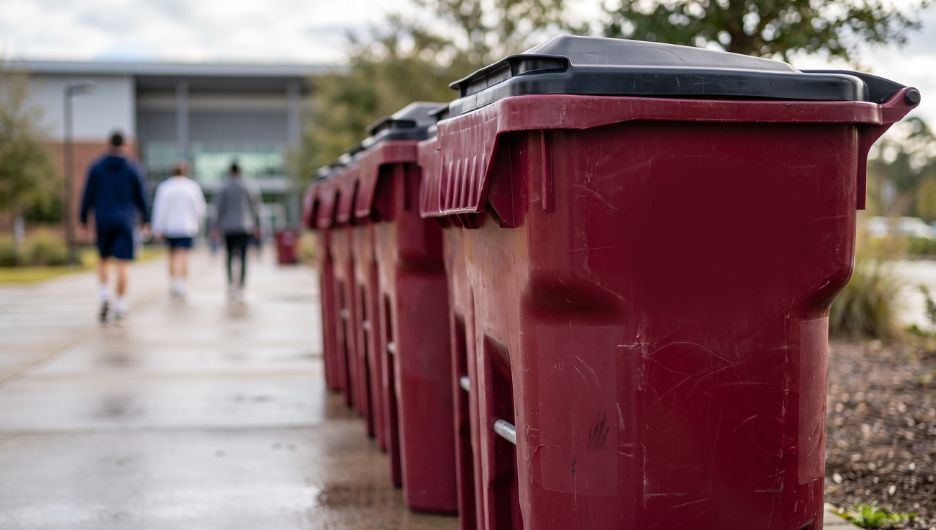
Universities are complex places to run. A campus works like a small city, with residence halls, dining facilities, academic buildings, athletics venues, offices, and a population that swells and empties with the academic calendar, all producing different kinds of waste. That complexity makes communicating about waste just as important as collecting it. A first-year student moving into a dorm has different questions than a lab manager or an events coordinator, and printed posters and static web pages rarely answer them fast enough.
ReCollect, a Routeware solution, helps universities make waste information easier to access. With this system, students and staff can check collection times, see how to get rid of various items, get reminders, and request special pickups on their phones or computers. Instead of relying on posters or searching websites, people can quickly find the answers they need.
Key Takeaways
- Universities generate a variety of waste from dorms, dining areas, labs, offices, and events. Clear communication about disposal is just as important as the collection process.
- When people are unsure where something goes, mistakes happen and bins get contaminated. If answers are easy to find, confusion drops and sorting improves.
- Seasonal surges like move-in and move-out create bulky-item spikes that are far easier to manage with online pickup requests than manual coordination.
- The University of Michigan gave its 60,000-person community a searchable disposal tool that became one of its most-visited resources and cut repetitive questions to the sustainability team.
Why Do Universities Need Better Waste Communication?
Waste on campus isn’t just about collecting trash. It’s also about making sure everyone understands what goes where. Students, staff, and visitors all bring their own habits. When they’re not sure what to do, they often just guess at the bin.
Guessing often means the wrong items end up together, which is expensive to fix. Signs and websites help, but they don’t always give fast answers for specific items. A better option is a tool that gives clear instructions on a phone, right when someone needs them. This also makes it easier for staff to keep information up to date.
How Does a Waste Wizard Help Students Find Answers?
A simple search tool can make a big difference. If a student types in “pizza box,” “batteries,” or “mini fridge,” they get clear, direct instructions for disposal. The search still works even if the person uses slang or spells something wrong. Drop-off locations and times show up, too, when they’re available.
This matters because every campus has its own rules and challenges. People need quick, simple answers instead of long policy documents. At the University of Michigan, the Waste Wizard tool helps over 60,000 people figure out where things go. It’s now one of the most-used resources, and it means staff get fewer repeat questions. Lower contamination is especially important for compost, since it’s hard to fix mistakes after the fact. Michigan calls its version “Where to Throw.” Harvard uses the name “Get Rid of It Right.” Each school can make the tool feel like part of its own campus.
How Can Universities Keep Campus Informed About Collection?
Campuses juggle schedule changes, holidays, break periods, big events, construction detours, weather, and a digital calendar with reminders is far easier to keep current than anything printed. Students and staff can look up when collection happens in their area and sign up for reminders, and the team can push an alert the moment something changes.
That solves a problem every campus knows: getting the right information to the right people at the right time, without making them hunt through several department pages. A reminder about a move-out collection window, a notice that a break changes the pickup schedule, a heads-up about a weather delay, each reaches people on the device they already check.
How Do You Get Students to Sort Waste Correctly?
Getting people to sort correctly is partly a teaching problem, and on a campus the audience turns over every year and is easy to lose in a flood of orientation messages. ReCollect’s sorting game gives students a more engaging way to learn: a quick drag-and-drop challenge where they sort items into the right streams across several levels, set up with the campus’s own branding and materials. As people play, it also shows which items are most often sorted wrong, which tells the sustainability team exactly where to focus signage and outreach.
That fits campus life well: new-student orientation, residence hall sustainability pushes, peer-educator programs, tabling events, and Earth Month activities. It turns a one-way message into something students do. Even a campus project that was configured but never launched showed the model adapts to higher education, with reward wording changed from Your Park to Your Campus. For more on reaching students specifically, our guide to helping students recycle is worth a look.
How Can Campuses Handle Move-Out and Seasonal Waste?
The types of waste on campus change during the year. When students move in or out, or when there are big events, there’s a spike in bulky items, cardboard, and things that could be reused. ReCollect lets people submit online pickup requests. Instead of sending lots of emails, students and staff can fill out one simple form to schedule pickups or arrange for donations and reuse.
That gives housing teams, facilities staff, and the sustainability office one clean intake channel for service needs, and it cuts the manual back-and-forth move-out usually generates. Handled well, a move-out surge becomes a scheduled set of pickups rather than a scramble. Our look at moving the needle on campus waste also covers how digital tools change these moments.
How Does ReCollect Fit Into a University’s Digital Experience?
Students expect campus services to be easy to reach on a phone and to look like they belong to the university. ReCollect is built to sit inside the university’s own website and app, carrying the campus’s branding rather than sending people to a separate, outside-looking tool. It is also built to meet accessibility standards, which are aren’t optional in higher education; tools have to work for the whole community, including people using assistive technology and people on every kind of device.
That lets a university fold waste communication into its broader digital experience instead of treating it as a separate utility off to the side. For the wider picture of running campus waste this way, our guide to campus waste management for universities goes further.
How Do Teams Keep Waste Information Up to Date?
Behind it all, a university needs a manageable way to keep information current and ReCollect puts it in one dashboard. Schedules, alerts, branding, materials, and requests are all maintained in one place, so the team isn’t chasing edits across a dozen scattered web pages. When a collection stream changes or a program evolves, the update happens once and shows up everywhere.
The team also gets a read on what is happening: what people search for, how they engage, and where the sorting game shows the most confusion. That turns guesswork about campus behavior into something the sustainability office can act on: sharper signage where it is needed, targeted outreach where confusion runs highest.
What Does Smarter University Waste Management Look Like in Practice?
Used well, a university would not just post a tool, and hope people find it. It would connect it to the moments that matter. Before arrival, links to the disposal search and the sorting game go into housing and orientation materials. During the semester, reminders and alerts carry service changes and campus cleanup events. At the bin, the disposal search sits on sustainability, housing, and facilities pages so students can answer their own questions. During move-out, the pickup request form handles bulky and reusable items. And afterward, the search and sorting data show the team where to improve signage and education next year.
Instead of relying on posters or one-way messages, universities can use tools that respond to what’s really happening on campus. They need more than just trash pickup – good communication helps everyone keep up with changing schedules and different kinds of waste.
Frequently Asked Questions
University waste management is how a campus collects, sorts, and communicates about the waste produced across its residence halls, dining facilities, labs, offices, and events. Because a campus works like a small city with many different users and seasonal swings, communicating clearly about what goes where is as important as the collection itself.
Universities reduce contamination mainly by helping people sort correctly when they decide where an item goes. A searchable disposal tool, clear and consistent signage, and engaging education like a sorting game reduce the guessing that mixes wrong materials into recycling and compost, where most campus contamination starts.
A Waste Wizard is a searchable tool that lets someone type in an item and instantly see how to dispose of it in their specific area. On a campus, students can look up anything from a coffee pod to a mini fridge and get clear guidance, and the search still works when they misspell a word or use casual terms.
Universities handle move-out waste by letting students and departments request pickups online instead of coordinating by email. Through a simple request form, people can schedule bulky-item collection, book appointments during move-out, and set up donation or reuse pickups, which turns a chaotic seasonal surge into a manageable set of scheduled collections.
Campuses reach students best through their phones, since a young, digital community rarely reads printed leaflets or bulletin-board posters. Tools that live on the university’s website and app, with reminders and alerts, deliver waste information on demand and at the right moment, rather than pushing it through channels students tend to ignore.
About the Author

Joel Scott
Joel Scott leads product marketing at Routeware. With more than two decades of experience in enterprise software for the public and private sectors across the UK and North America, Joel writes on the critical operational and technology challenges facing governments and resource management companies today.
 North America
  United Kingdom