Blog
5 Ways to Optimize Waste Management Fleets with Smart Trucks
by Aidan McLennan • December 12, 2025
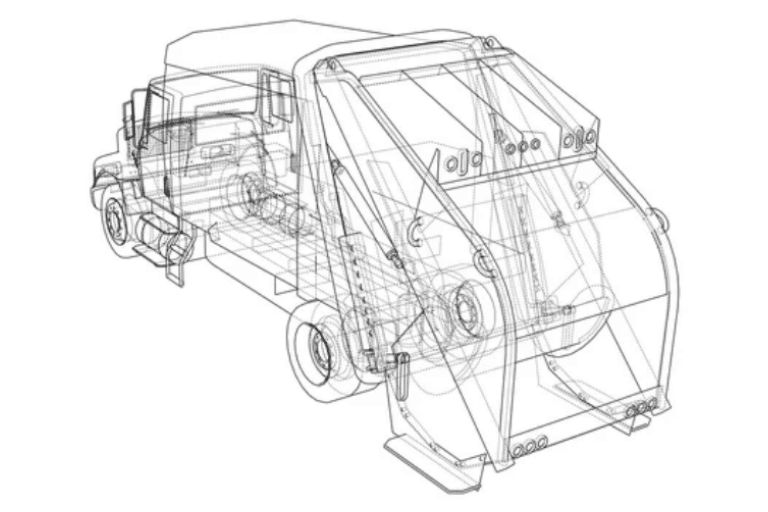
Much of the waste management truck technology that municipalities and haulers utilize to help meet solid waste and recycling challenges centers on the collection vehicle itself. As technology continues to evolve, trucks collecting waste will become even more important than in previous years, as smart trucks will both collect and transmit more data from a centralized command center.
Let’s explore what this means for waste management trucks and haulers, and the benefits that smart truck technology can provide to companies in this industry.
Key Takeaways
- A smart garbage truck carries sensors, cameras, and on-board computers that gather and transmit route data in real time between the truck and the back office.
- Smart truck technology cuts go-backs and captures billable extras, because cameras and one-tap logging give the office proof of what happened at the curb.
- Real-time in-cab account data lets drivers skip non-paying accounts and serve the right customers, protecting revenue on every route.
- Haulers typically report the technology pays for itself within 12 to 18 months, through efficiency gains, captured revenue, and better driver retention.
What Are Smart Trucks?
A smart truck is equipped with sensors, cameras, and other waste management technology that allows it to receive and gather information as it travels through the city, equipped with on-board computers for data collection and transmission. Smart trucks do this automatically, on a continuous line of communication with the back office of the waste hauling operation, helping to keep both the company and the garbage truck waste management operation better informed about their route.
Get Started With Waste Management Technology
Increase efficiency, profitability, and customer satisfaction with Routeware. Get Started
In terms of how this information is used, smart trucks help drivers deliver routes more efficiently and effectively with onboard computers that provide turn-by-turn directions and enable operators to mark skips and make notes with the touch of a button.
In turn, communication between the smart truck and the office is enhanced: Office staff can see where waste disposal trucks are located in real time, see images and videos captured along routes to help answer questions when they call, and dispatch helper smart trucks on the fly, saving time and money while increasing safety.
Waste management fleet leaders use telemetry data collected from smart trucks to better understand what’s happening on routes, to coach drivers who need help, and to reward high-performing, highly valuable drivers.
In the municipal space of waste management, smart trucks allow solid waste leaders to optimize the waste collection process, generally as part of larger smart city goals. Routeware’s reliable smart truck automation helps to achieve profitability goals for waste haulers as well as sustainability goals for smart cities, all in one package.
How Are Smart Trucks Part of a Broader Smart City Strategy?
While smart city initiatives are most commonly aligned with traffic, transportation, power and utilities, waste management and sanitation fit within the framework. Likewise, smart trucks that collect data and send it back to public works for analysis fit neatly within the parameters of the integrated, smart city model, and a proper implementation of the waste management trucks can make this information transfer part of the daily routine for smart truck technology.
A writer for Forbes painted the picture this way: A traditional city is like a series of silos. Housing, transportation, streets, and sanitation are stand-alone departments united under one mayor and city council. A smart city, by contrast, is a system of systems, wherein each city function or department is tied to the others. This creates a single web of information and an integrated view of things.
Most smart cities employ interactive technology via the Internet of Things (IoT). This includes sensors, meters, and other autonomous electronics to gather data and transmit it to city centers, where it gets analyzed to help optimize waste management operations. Clearly, smart trucks have a role to play here, and Routeware provides these waste management solutions.
While the term “smart city” is now older than many of the technologies used in its service — the term turns 23 this year — employing smart technology in a waste management fleet alone does not make a city smart. For example, cities that tap into technology but do not use it to transmit or collect information are not smart cities; they are simply cities that use technology. The “smart” in “smart city” refers to the interconnectedness of this technology, rather than the use of the waste disposal truck technology in question.
The same goes for cities that use technologies managed by other organizations or entities. To be deemed a smart city, it is understood that municipalities or government entities must be part of the data collection and transmission process. Routeware provides the best digital foundation for modern public works and smart city operations.
Standard Truck vs Smart Garbage Truck
The difference a smart garbage truck makes is easiest to see side by side. For a wider look at choosing the technology behind it, our guide to evaluating waste hauler software is a useful companion.
| Standard collection truck | Smart garbage truck |
|---|---|
| Paper routes and manual notes | On-board computer with turn-by-turn routing and one-tap logging |
| No visibility into what happened at the curb | Cameras and photos capture proof at every stop |
| Extras logged on paper, often missed | Extras tapped in and sent straight to billing |
| Office cannot see truck location | Real-time location and route progress in the back office |
| No driver performance data | Telemetry data to coach and reward drivers |
How Can Haulers Use Smart Truck Technology?
When it comes to streamlining operations and capturing lost revenue, waste disposal truck haulers generally report that strategic technology pays for itself in 12 to 18 months, and dividends continue to add value to the bottom line in the months beyond. Smart garbage trucks will pay for themselves once implemented, and as technology continues to improve, this ROI may reach the break-even point even sooner.
Smart truck technology helps haulers identify and fix some of the most expensive mistakes they’re likely to make while growing their businesses, and turn those issues into opportunities:
Track Go-Backs & Avoid The Cost of Trucks Returning to Collect Waste
Without seeing what’s happening at the curb, haulers can’t reduce go-backs or charge for extras.
Haulers like Gaeta Green Environmental Services in Staten Island, New York, rely on truck cameras and video service that gather photos and video at every stop — in tandem with onboard computers that keep drivers and office staff in constant communication. This smart truck technology empowers drivers to skip non-compliant collections and gives customer service representatives the irrefutable evidence they need to push back on expensive go-backs (or charge for them).
Plus, photos from the curb allow managers to see what’s happening there so they can properly address problems before they escalate.
Understand Where You’re Losing on Extra Waste Collections — and Start Charging for Them
An extra bag of yard debris here, a Christmas tree there, and an oversized item down the street. When waste management fleets feel the pinch of increased collections but see diminishing returns, it’s often because logging extras on paper is a tedious and unreliable method that leads to providing additional services for free.
Haulers that leverage in-cab technology make it easy for drivers to log extras by tapping a button and selecting the type of “extra” from a customized list. Direct integration with their billing systems allows these charges to be automatically added to a customer’s invoice. When used in conjunction with smart truck features like photo and video functionality, haulers have proof of services rendered, which eliminates some potential customer disputes, too.
How To Rely on Smart Truck Technology & Data
Fleet costs are always on the rise. Trucks aren’t cheap – not to buy, lease, insure, or maintain — and increasing a fleet’s size without increasing overall workload or efficiency creates waste. By one estimate, the cost to operate a collection vehicle for one hour in 2023 is $180, or $3 per minute.
Haulers like American Refuse in Wasco, California, that rely on an integrated system that includes smart truck features, onboard devices, and back-office software can track data that reveals how routes can be made more efficient.
In one case, data showed that each driver could take on 10% more stops without increasing hours worked, thereby allowing the hauler to reduce 10% of its fleet without reducing services.
How Can Haulers Use Smart Truck Technology?
When it comes to streamlining operations and capturing lost revenue, waste disposal truck haulers generally report that strategic technology pays for itself in 12 to 18 months, and dividends continue to add value to the bottom line in the months beyond. Smart garbage trucks will pay for themselves once implemented, and as technology continues to improve, this ROI may reach the break-even point even sooner.
Smart truck technology helps haulers identify and fix some of the most expensive mistakes they’re likely to make while growing their businesses, and turn those issues into opportunities:
Track Go-Backs and Stop Paying for Return Trips
Without seeing what’s happening at the curb, haulers can’t reduce go-backs or charge for extras.
Haulers like Gaeta Green Environmental Services in Staten Island, New York, rely on truck cameras and video service that gather photos and video at every stop — in tandem with onboard computers that keep drivers and office staff in constant communication. This smart truck technology empowers drivers to skip non-compliant collections and gives customer service representatives the irrefutable evidence they need to push back on expensive go-backs (or charge for them).
Plus, photos from the curb allow managers to see what’s happening there so they can properly address problems before they escalate.
Capture Extra Collections and Bill for Them
An extra bag of yard debris here, a Christmas tree there, and an oversized item down the street. When waste management fleets feel the pinch of increased collections but see diminishing returns, it’s often because logging extras on paper is a tedious and unreliable method that leads to providing additional services for free.
Haulers that leverage in-cab technology make it easy for drivers to log extras by tapping a button and selecting the type of “extra” from a customized list. Direct integration with their billing systems allows these charges to be automatically added to a customer’s invoice. When used in conjunction with smart truck features like photo and video functionality, haulers have proof of services rendered, which eliminates some potential customer disputes, too.
Use Smart Truck Data to Run Leaner Routes
Fleet costs are always on the rise. Trucks aren’t cheap – not to buy, lease, insure, or maintain — and increasing a fleet’s size without increasing overall workload or efficiency creates waste. By one estimate, the cost to operate a collection vehicle can run roughly $180 an hour, or about $3 a minute.
Haulers like American Refuse in Wasco, California, that rely on an integrated system that includes smart truck features, onboard devices, and back-office software can track data that reveals how routes can be made more efficient.
In one case, data showed that each driver could take on 10% more stops without increasing hours worked, thereby allowing the hauler to reduce 10% of its fleet without reducing services.
Ready to Become a SmartCity?
Experience the benefits of integrated waste management technology that works as hard as you do. Become a SmartCity
Invoice for Every Service and Skip Non-Paying Accounts
Without real-time account information visible inside the truck, drivers don’t know which customers to serve and which to skip. And so, in the spirit of providing excellent service, there have been many times when those whose bills haven’t been paid receive collection when a suspension would be in order.
In-cab computers let drivers know, in real time, which collections to skip and why. When skipped waste collection occurs, your organization misses out on prompt payment.
Retain Your Most Valuable Drivers
Without information about drivers’ individual performance behind the wheel, it’s impossible to coach struggling drivers or reward successful ones. This lack of information leads to employee turnover and subsequent increased recruitment and training costs.
Forward-thinking waste management fleets like Pride Disposal in Beaverton, Oregon, are using fleet automation tools and smart truck insights to quickly train new drivers, help those who need it, and reward those who are doing an excellent job.
Why Your Waste Management Business Needs Smart Truck Technology
Without proven waste management truck tools that help identify challenges, many haulers struggle to maintain profitability and grow their business.
Whether they’re managing public or private waste and recycling collection operations, solid waste leaders who rely on modern technologies to identify efficiencies and plug revenue leaks provide better value to the communities they serve.
For municipalities, smart truck technology means making the most of tight budgets and providing the best value to people. For haulers, technology creates opportunities to build a brand and scale business while staying ahead of the competition.
Learn more. It’s time to upgrade your waste management vehicles with smart truck technology that’s built for municipalities and haulers. Routeware delivers the best long-term ROI for both public and private waste organizations. Get Started today!
Frequently Asked Questions
A smart garbage truck is a collection vehicle fitted with sensors, cameras, and an on-board computer that gather and transmit data as it runs its route. It stays in constant communication with the back office, so the truck both collects waste and feeds real-time information back to the operation.
The core is an on-board computer that gives drivers turn-by-turn routing and one-tap logging of skips, extras, and notes, paired with cameras that capture photos and video at each stop. On a platform like Routeware Elements, that field data flows straight to dispatch and billing so nothing is rekeyed.
They give the office proof of what happened at the curb. When a customer disputes a missed pickup, cameras and timestamps show whether the bin was out or the collection was non-compliant, so the operation can resolve it without sending a truck back, and can charge for legitimate extra work instead of absorbing it.
Two ways: drivers tap in extras (an oversized item, extra bags) that flow to billing automatically instead of being given away, and real-time account data lets drivers skip non-paying accounts rather than servicing them for free. Together, those close the revenue leaks a paper-run operation absorbs.
Yes. A smart city is a connected system where each department shares data, and a smart truck that collects and transmits route data to public works fits that model directly. A platform like Routeware SmartCity ties the fleet into the broader municipal data picture.
About the Author

Aidan McLennan
Aidan McLennan is the Senior Demand Generation Manager at Routeware, where he focuses on connecting waste management and fleet operations professionals with insights that help them modernize their operations. With a background spanning content strategy, ABM, and marketing operations in B2B SaaS, he writes about the intersection of technology, efficiency, and the infrastructure that keeps communities running. Based in Simcoe County, Ontario, he sees firsthand how the services Routeware supports shape the places people actually live.
 North America
  United Kingdom