Blog
The City That Already Knows: How Waste Fleets Are Rewriting the 311 Model
by Routeware Team • April 27, 2026
Cities spend enormous resources trying to understand their own condition. Inspection programs. Complaint hotlines. Resident apps. Audit cycles. The underlying goal is always the same: find out what’s broken before it becomes a bigger problem.
What most cities don’t realize is that they already operate one of the most thorough, consistent observation networks imaginable. It runs every week, covers almost every street, and visits nearly every neighborhood. It costs nothing extra to deploy.
It’s the waste collection fleet.
The question isn’t whether that resource exists. It’s whether cities are using it.
311 was built for a different era
The promise of 311 was real and meaningful. Before it existed, a resident with a pothole on their street had to figure out whether to call Public Works, Transportation, or Infrastructure (and often reached the wrong department anyway). A single non-emergency number changed that. It centralized the experience and made city government more accessible.
311 has worked well for twenty years. But the model it was built on hasn’t fundamentally changed: a resident notices something, reports it, and the city responds.
That model has a ceiling.
It assumes that what gets reported reflects what actually needs attention. And that assumption, quietly, has never been true.
Most city problems are never reported
This isn’t a criticism of residents. It’s a structural reality.
People are busy. Illegal dumping that appears overnight may not generate a complaint for days. An overflowing public bin in a lower-traffic area may sit unnoticed until a crew happens to pass by. Infrastructure deterioration is gradual: residents often don’t perceive a problem until it’s well past the point where early intervention would have been cheaper.
Even in highly engaged communities, reports are uneven. Some neighborhoods generate more service requests per capita than others, not always because conditions are worse, but because residents are more accustomed to using the system. Cities that rely entirely on inbound 311 reporting end up with a picture of the city that reflects who calls, not where the problems are.
Municipalities have tried to close this gap with dedicated inspection teams, scheduled audits, and field supervisors. These approaches work, but they also add cost, staffing pressure, and scheduling complexity on top of operations that are already stretched.
The fleet that’s already everywhere
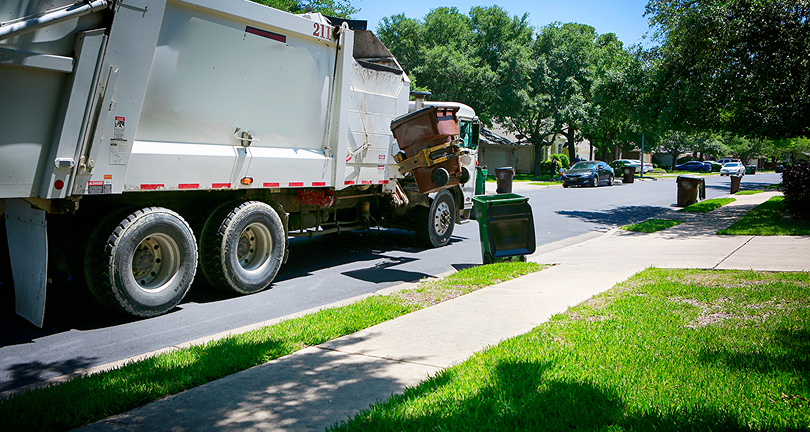
Waste collection vehicles travel virtually every street in a municipality on a predictable, recurring schedule. Residential, commercial, industrial, public — few departments achieve that kind of geographic reach with that kind of consistency.
Historically, fleets were optimized for one thing: completing routes. That remains the priority. But the technology available to those vehicles has changed dramatically.
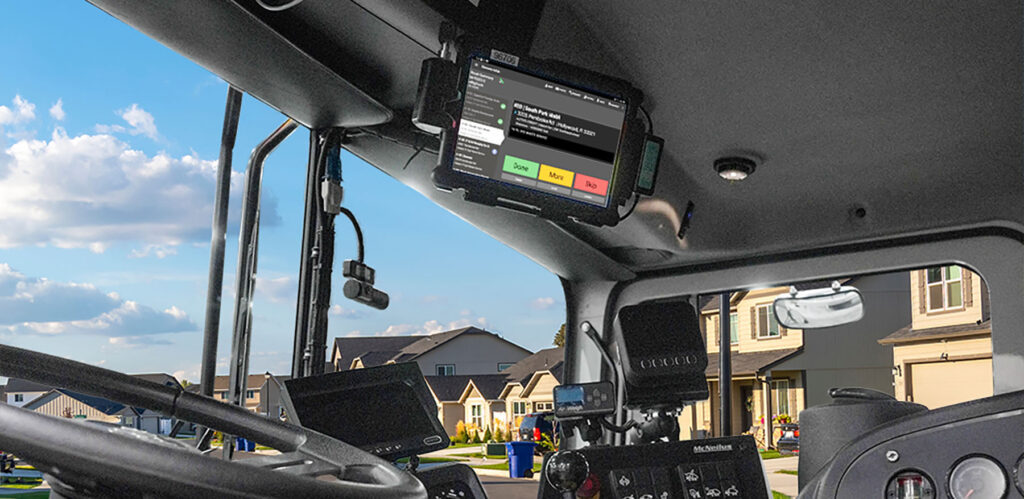
Camera and sensor systems mounted on collection vehicles can now observe street-level conditions while crews perform the work they were already going to do. The fleet doesn’t need to change its route. No new vehicles need to be dispatched. The observation happens as a byproduct of the work already funded and scheduled.
What those systems can capture includes:
- Illegal dumping locations, with GPS coordinates and photographic documentation
- Overflowing public containers
- Damaged or missing signage
- Roadway hazards and surface deterioration
- Accessibility barriers
- Recurring service obstacles that affect collection efficiency
The key word is automatically. This isn’t asking drivers to take on new reporting responsibilities. The technology works in the background, turning routine movement into structured, actionable data.
When the city stops waiting for the phone to ring
Most 311 platforms today operate on Open311 standards, allowing service requests to route efficiently between departments and digital systems. The workflow is well-established: a resident reports an issue, it enters the system, the right department picks it up.
SmartCity fleet integration adds a new participant to that workflow: the city itself.
Instead of waiting for a resident to notice illegal dumping on a side street and submit a report, a connected waste vehicle can detect it, classify it, and generate a verified service request automatically. It enters the 311 workflow the same way a citizen report would…except it’s already got a location, a timestamp, and photographic documentation attached.
The process doesn’t replace citizen reporting. It fills in the gaps that citizen reporting inevitably leaves.
What changes across departments
This is where the impact extends well beyond waste operations. Because collection vehicles travel across the entire municipality, the observations they generate are useful to departments that have nothing to do with waste collection.
| Department | What fleet intelligence can surface |
|---|---|
| Public Works / Roads | Pothole locations, crumbling curbs, drainage blockages |
| Bylaw / Code Enforcement | Illegal dumping, property violations, signage damage, graffiti on public infrastructure |
| Parks & Recreation | Overflowing public bins, pathway hazards, amenity damage |
| Accessibility Services | Obstructed curb cuts, damaged ramps, blocked routes |
| Emergency Management | Recurring hazards, flood-prone areas, infrastructure stress points |
| Resident Services | Faster 311 resolution through pre-verified, location-stamped reports |
A single fleet, already in motion, feeding actionable intelligence to six departments. That’s the operational leverage cities are beginning to understand.
Why this shift is happening now
Cities have known for years that waste vehicles cover a lot of ground. What’s changed is the convergence of several factors that make acting on that observation practically possible.
Technology costs have dropped. Camera and sensor systems that were prohibitively expensive a decade ago are now deployable at fleet scale without massive capital investment.
Data infrastructure has matured. Municipalities now have the platforms to receive, route, and act on structured data across departments. This is something the 311 systems of ten years ago weren’t built to handle.
Staffing pressure is real. Proactive inspection programs require people. As municipalities face workforce constraints, technology that extracts intelligence from existing operations becomes more attractive than building new teams.
Resident expectations have shifted. People are accustomed to services that anticipate needs rather than wait to be asked. Cities that only respond to reports are starting to feel slow by comparison.
These forces aren’t pushing cities toward some distant future state. They’re driving adoption now.
A smarter city isn’t built, it’s unlocked
The conversation around Smart Cities often defaults to grand infrastructure visions: sensor networks, connected traffic grids, real-time command centers. Those investments have their place. But for most municipalities, the clearest path to operational intelligence isn’t laying new infrastructure.
It’s recognizing what the existing infrastructure is already capable of.
Waste fleets don’t need to become something different to participate in Smart City transformation. They need better technology on top of the work they’re already doing, and a 311 system ready to receive what they generate.
When that connection exists, something straightforward happens: the city stops being dependent on what residents happen to notice. It starts knowing.
Issues get identified before complaints escalate. Resources go where conditions are worst, not just where calls are loudest. Departments that have historically operated in silos start sharing a common operational picture.
That’s not a futuristic vision. For cities already integrating connected fleet technology with 311 platforms, it’s a description of how Tuesday morning works.
The vehicles are already on the road. The question is how much the city asks them to see.
Get Pricing today.
Frequently Asked Questions
Open311 is a standardized system allowing municipal service requests to move automatically between city platforms and departments.
By generating service requests automatically through connected technologies instead of relying only on citizen reporting.
They provide consistent geographic coverage, allowing cities to monitor conditions without deploying additional inspection teams.
 North America
  United Kingdom