Blog
Flexible Plastics Collections and 2027: Impacts and Solutions for UK Local Authorities
by Routeware Team • February 4, 2026
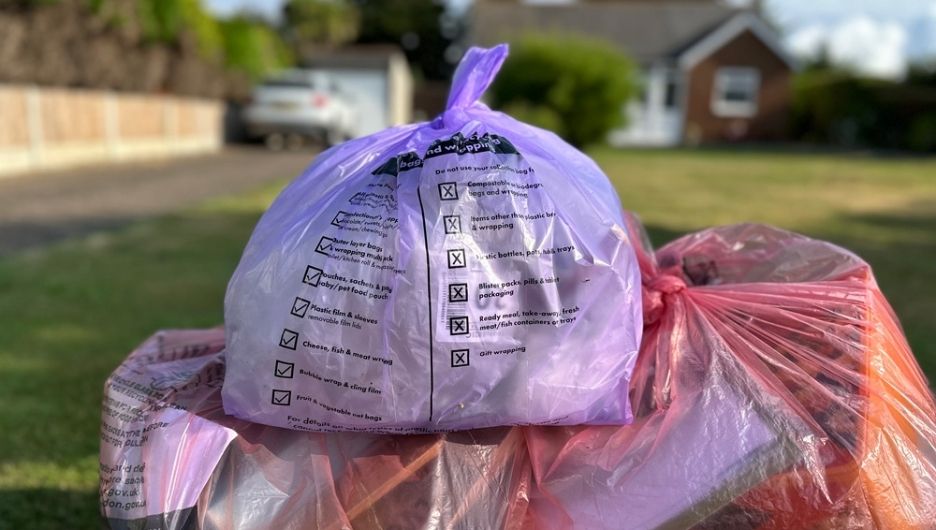
As previously announced as part of the Simpler Recycling programme, from March 2027, local authorities will need to introduce kerbside collections for flexible plastics from households and relevant non-domestic premises.
The rollout of this new recycling stream represents a host of practical, financial and operational challenges for councils, with significant implications for services and residents.
Impacts
One of the first hurdles councils have faced is service design and delivery. Collecting flexible plastics in addition to existing streams means adapting current collection rounds, potentially adding new containers or bags and ensuring the current operation can handle the additional material without overwhelming existing budgets and resources.
Although recent pilots have shown households generally participate well and contamination rates can be low, integrating this into the full range of urban and rural collection environments remains complex and resource intensive.
A particular concern is infrastructure capacity. The UK currently lacks sufficient processing facilities to handle the expected volume of flexible plastics once kerbside collections become mandatory.
According to recent analysis, projections suggest that even by 2030 only a small fraction of the total flexible plastics placed on the market will be captured and processed domestically, due in part to limited sorting and recycling facilities. Without urgent investment, councils risk collecting materials that cannot be adequately recycled at scale, leading to stockpiling or export for processing abroad.
This lack of local processing capacity also ties into market viability. Flexible plastics often have lower economic value than rigid plastics or metals, meaning councils and their waste management partners struggle to find stable end markets. And with plastics counting towards new Emissions Trading Scheme (ETS) metrics, authorities will want to make sure that additional plastics are not ending up in residual waste.
Public communication and behaviour change represent another key challenge. Despite the looming 2027 deadline, surveys indicate that a significant majority of the public remain unaware of the upcoming changes. At the same time, confusion around what can be recycled, especially with new categories like flexible plastics, still leads to contamination and reduced recycling quality, often through well-meaning wishcycling.
Effective recycling engagement campaigns, with tailored messaging, clear instructions and ongoing education will be essential and have increased return on investment going forward, but delivering such communication programmes can be costly and complex for councils.
And as with other recycling services, authorities also face practical issues in setting up and making collections in high-density and multi-occupancy housing. Flexible plastic collection trials have tended to work well in suburban and rural areas, but flats present distinct logistical problems, from fitting additional containers in communal areas to ensuring appropriate communications.
The ‘How to Recycle’ web pages on most council websites are geared towards the containers provided to houses. Information for residents of flats is either hard to find or just not there. This one size fits all approach results in frustration for residents who want to recycle (low participation) and the wrong materials ending up in the wrong waste streams (high contamination).
Solutions
We believe technology can support the rollout of new flexible plastic collections in a number of ways.
First and foremost, resident engagement digital tools and apps can help improve community recycling outcomes and ensure as few plastics as possible find their ways into the residual waste.
Many local authorities now supplement their traditional paper leaflets with digital website tools and apps that can help them reach new audiences in more engaging and cost-effective ways.
For example, Newcastle City Council used Routeware’s Resident Engagement tools to support their successful participation in the Flexible Plastic Fund’s FlexCollect Project, the UK’s most extensive pilot initiative aimed at transforming the recycling of flexible plastic packaging.
As one of ten local authorities who volunteered for the three-and-a-half-year trial, Newcastle played a pivotal role in shaping national policy and demonstrating the feasibility of kerbside collection for materials such as plastic bags and wrapping.
Using our solution Newcastle were able to deliver personalised campaign messages to only households in the plastic bag and wrapping trial, as well as offering specific information on “recycling with plastic bags and wrapping” on collection calendars.
With flexible plastics representing a new recycling stream for most authorities, it is likely that, initially at least, much material will be presented as residual waste. Crews can help identify this using in-cab technology. Solutions such as Routeware SmartCity let crews record contamination and non-participation as they run their rounds, and this data can be used to identify hotspots and target resident communications and interventions.
Going forward, we expect to see AI play an increasingly important role in identifying contamination at source. Routeware’s latest vehicle-mounted camera solution enables the capture of images from around the vehicle as well as a view into the hopper. Pictures are captured automatically without the need for manual driver input. Captured images are then processed using an AI model to identify issues such as contamination (the wrong materials in the container) or overfilled bins that breach rules and regulations.
Putting in the right infrastructure for residents, an efficient and effective set of collection rounds, and an effective multi-channel communication and engagement strategy, are all tried and tested ways to improve recycling rates and reduce contamination. Used alongside these strategies, digital engagement tools and in-cab technology can further increase recycling rates at the same as reducing costs for the council.
If you’d like to discuss any aspect of this article, the customer stories referenced or the solutions that have been highlighted, please get in touch using the form below.