Blog
12 Days of Trash: A Complete Holiday Waste Survival Guide
by Routeware Team • December 15, 2025
As the holiday season ramps up, so does the trash. Between decorations, gift wrap, food (and the hustle and bustle) waste volumes spike dramatically.
That’s why we created 12 Days of Trash, a holiday-themed, step-by-step guide to managing seasonal waste in a smarter, safer, and more sustainable way. Whether you’re a city manager, waste hauler, or community leader, this guide shows how to help residents dispose properly and protect your collection system.
Below, we roll all the “Days” into one complete resource.
Why Holiday Waste Needs Extra Care
- Between Thanksgiving and New Year’s, household waste increases by about 25%.
- People buy more food and throw more away: holiday food waste contributes heavily to landfill burden.
- The typical American produces ~5 lbs of trash per day (35 lbs/week). During holidays, that can climb to ~6.25 lbs/day (43.75 lbs/week).
- That adds up: 80% of holiday waste could be reused, repurposed, or recycled; but confusion, “wish-cycling,” and lack of guidance often lead to contamination or wrongful disposal.
The takeaway? Holiday waste isn’t just a seasonal surge, it’s a challenge for collection systems, recycling operations, and community services. Without proper planning and communication, it can cause safety issues, equipment damage, and service backlogs.
The 12 Days of Trash: A Unified Plan
Here’s a full breakdown of what waste and recycling operators can expect, and how communities can respond, across 12 days’ worth of holiday-related waste items, from pre-holiday decor to post-holiday cleanup.
Days 1–4: Decorations, Lights & Holiday Fixtures
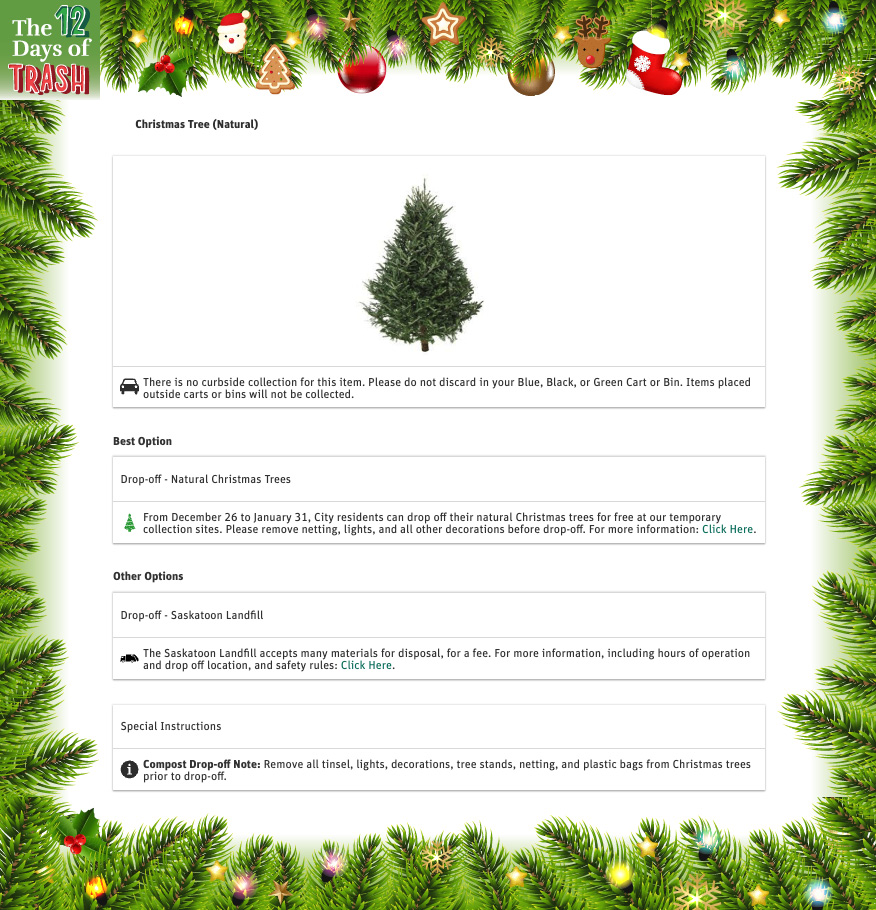
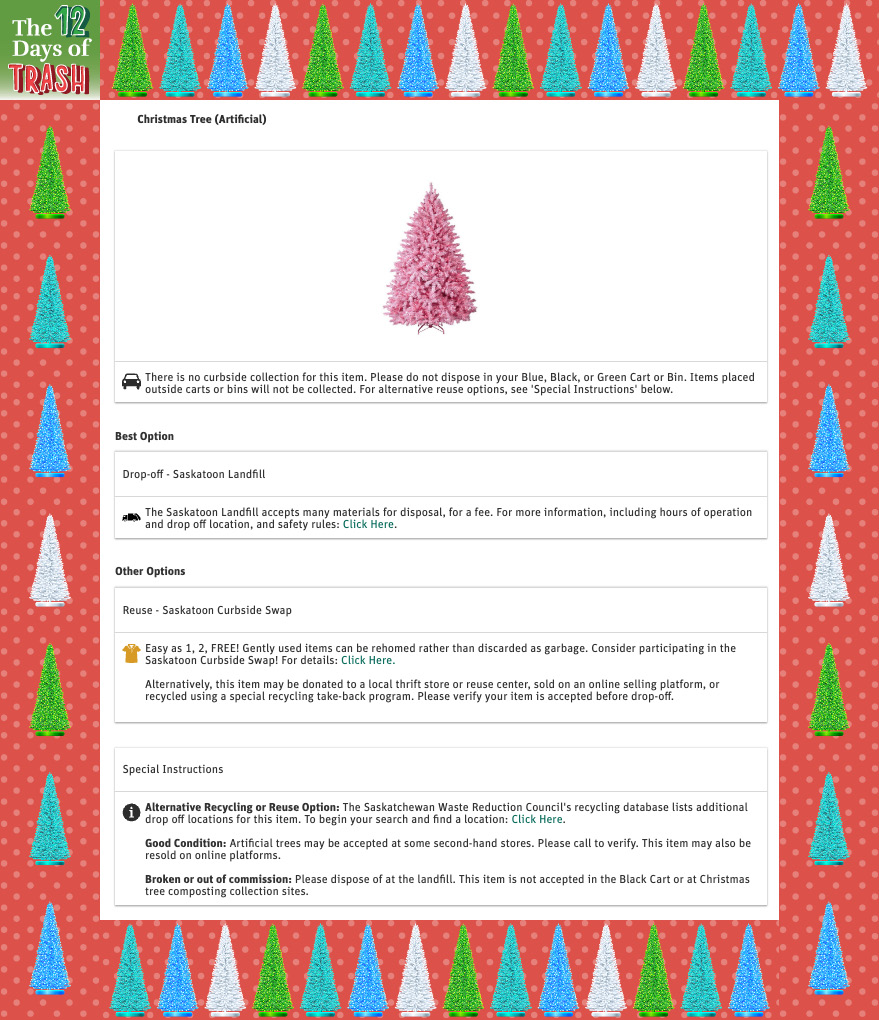
- Christmas Trees & Tree Cuttings
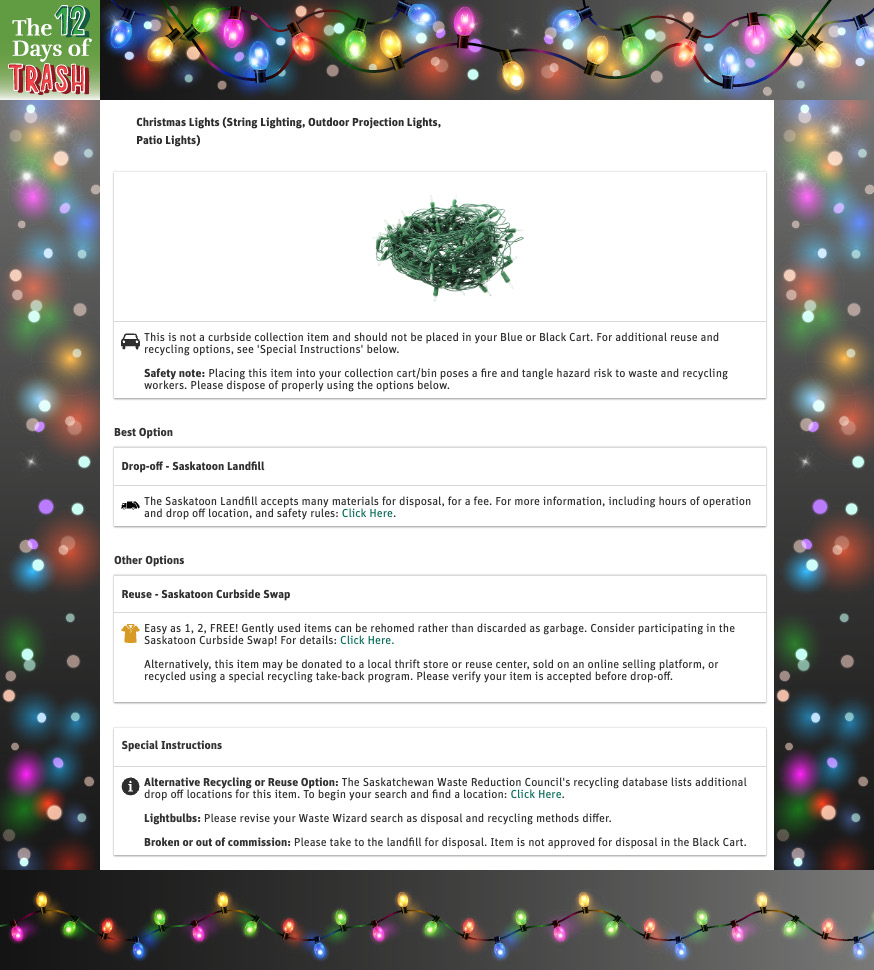
- Christmas Lights & String Lighting
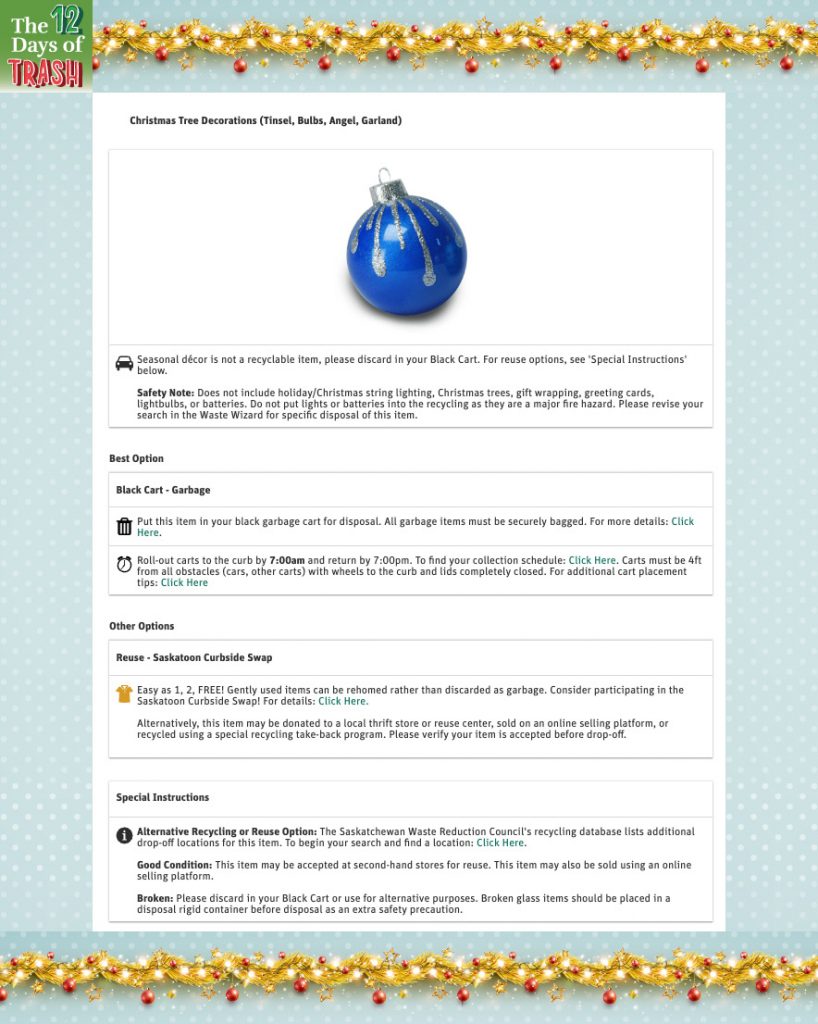
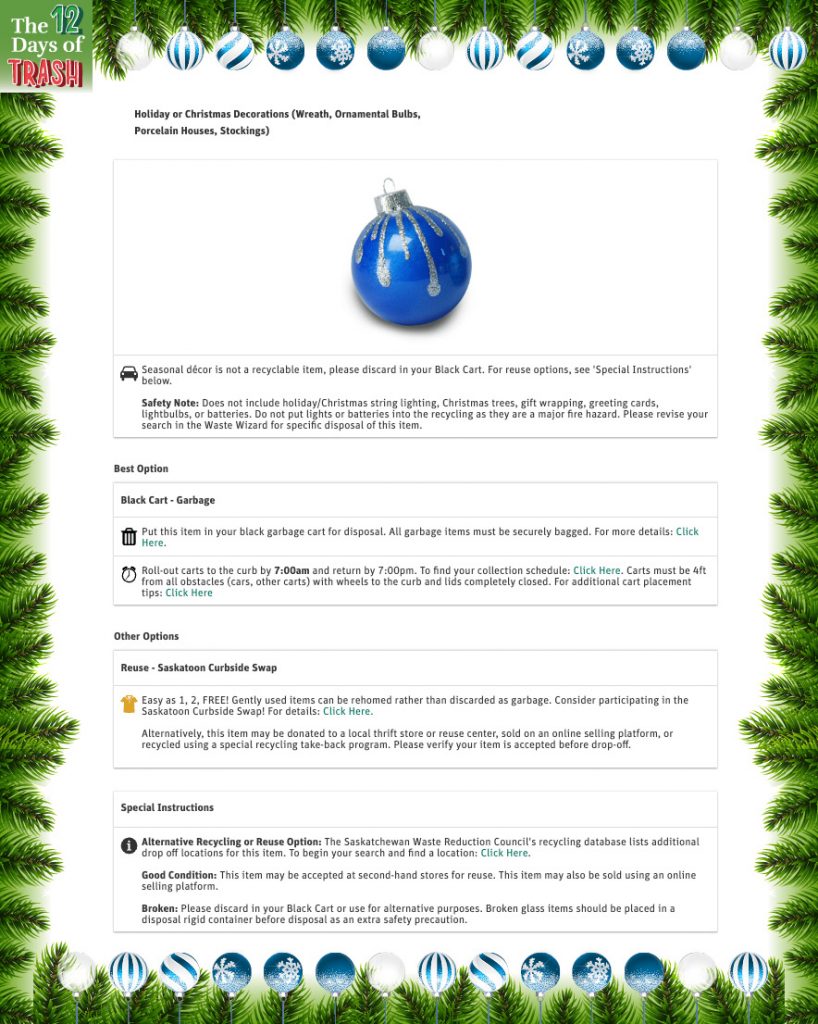
- Tree Decorations: Tinsel, Bulbs, Garlands, Ornaments
- Holiday Décor: Wreaths, Stockings, Porcelain Houses, Seasonal Knickknacks
These items often contain mixed materials (metal, glass, plastic, wiring) that confuse sorting, which leads to contamination or rejected loads at recycling centers.
What works: Provide clear guidance via resident tools or apps so people know exactly how to dispose of or recycle decorations. Promote reuse of intact items, and schedule special collections for large or non-standard holiday items.
Days 5–8: Packaging, Wrapping & Food Waste
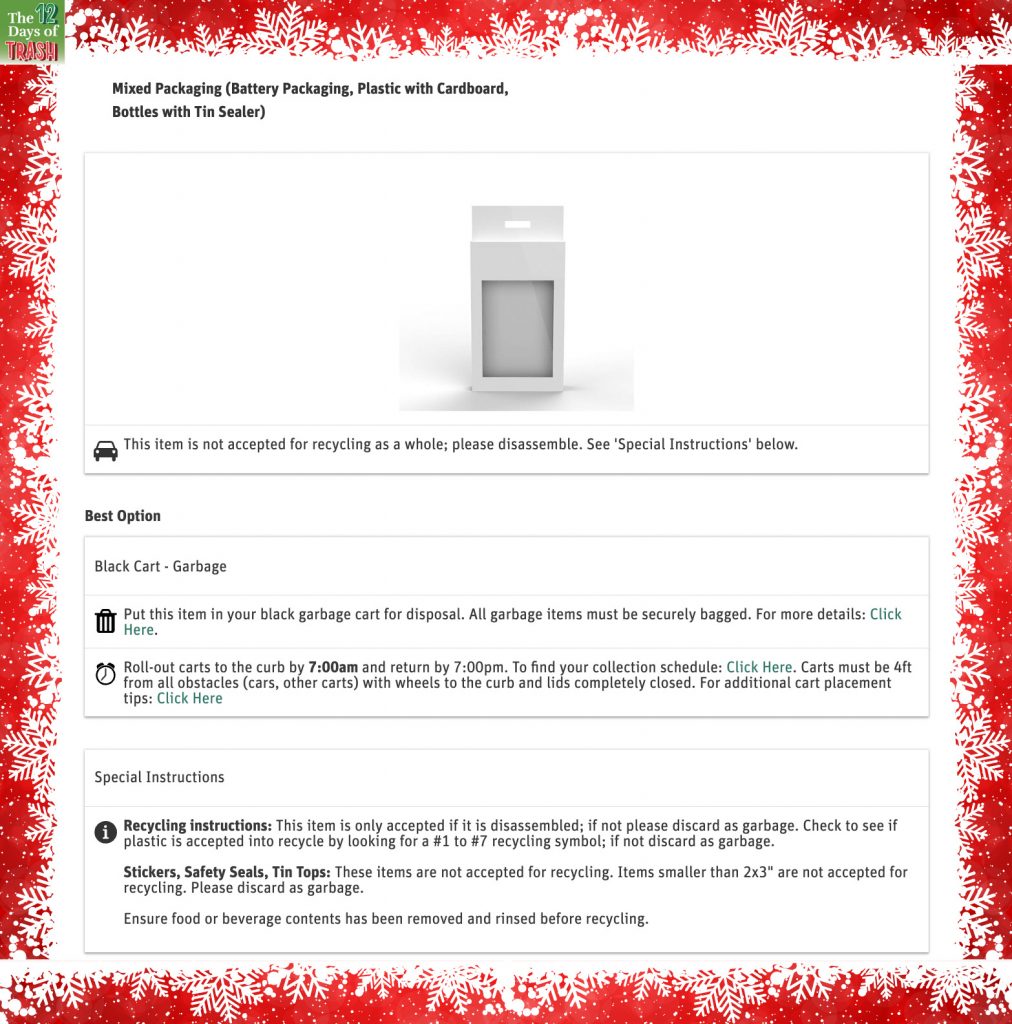
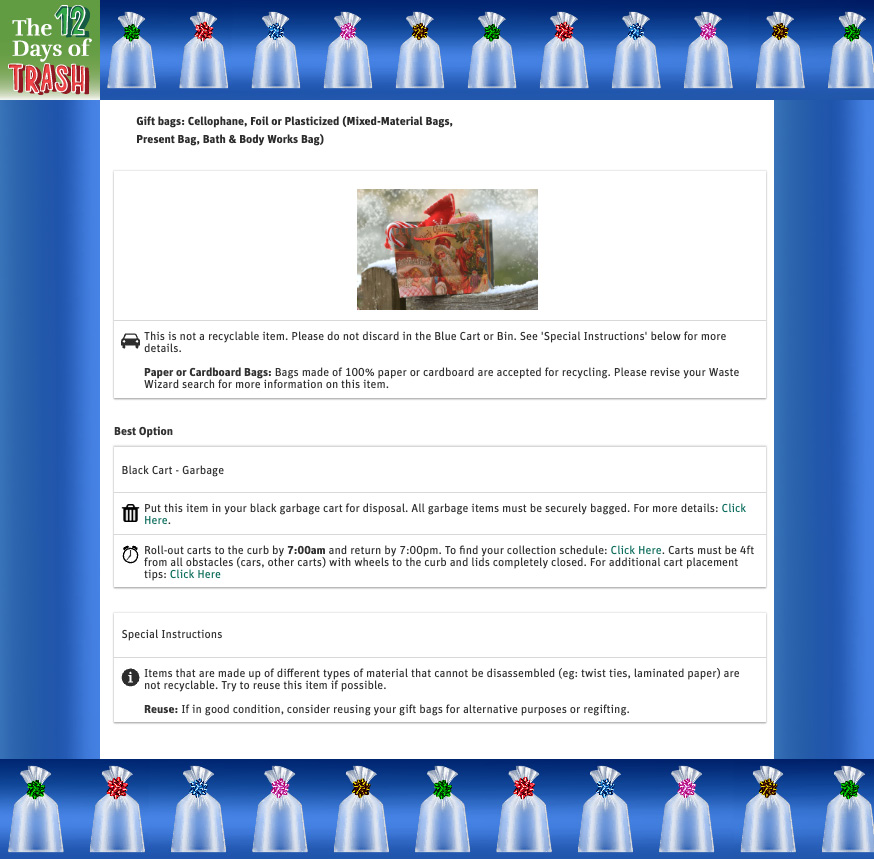
- Gift & Toy Packaging: Mixed-material packaging (plastic + cardboard), bubble wrap, air-filled packaging, sealing films
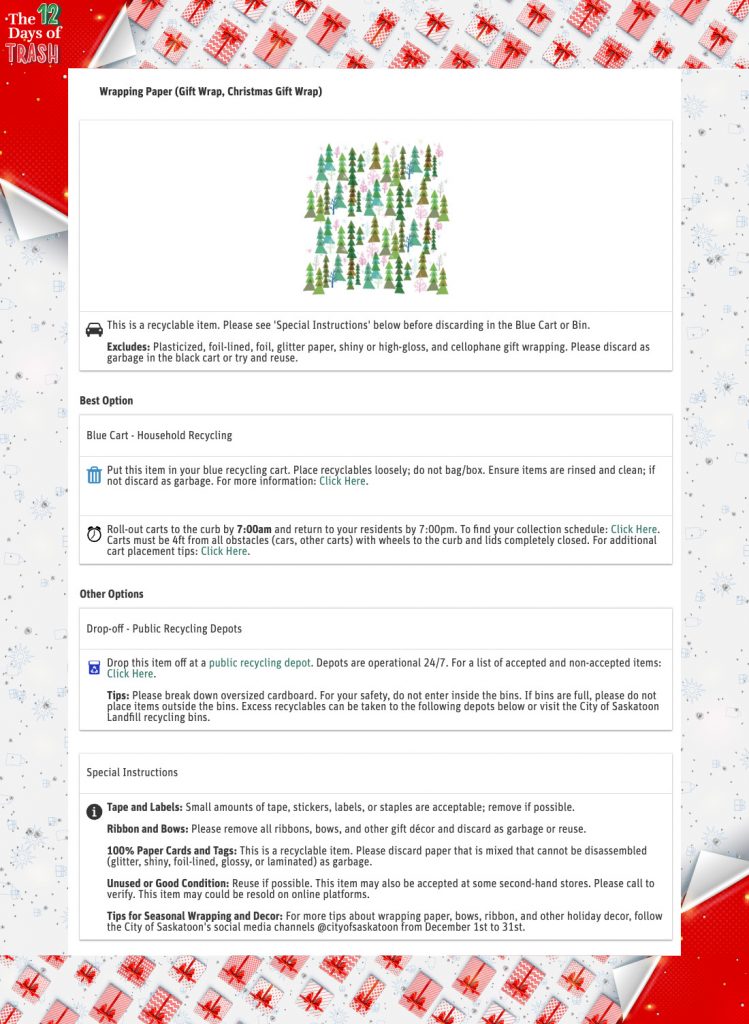
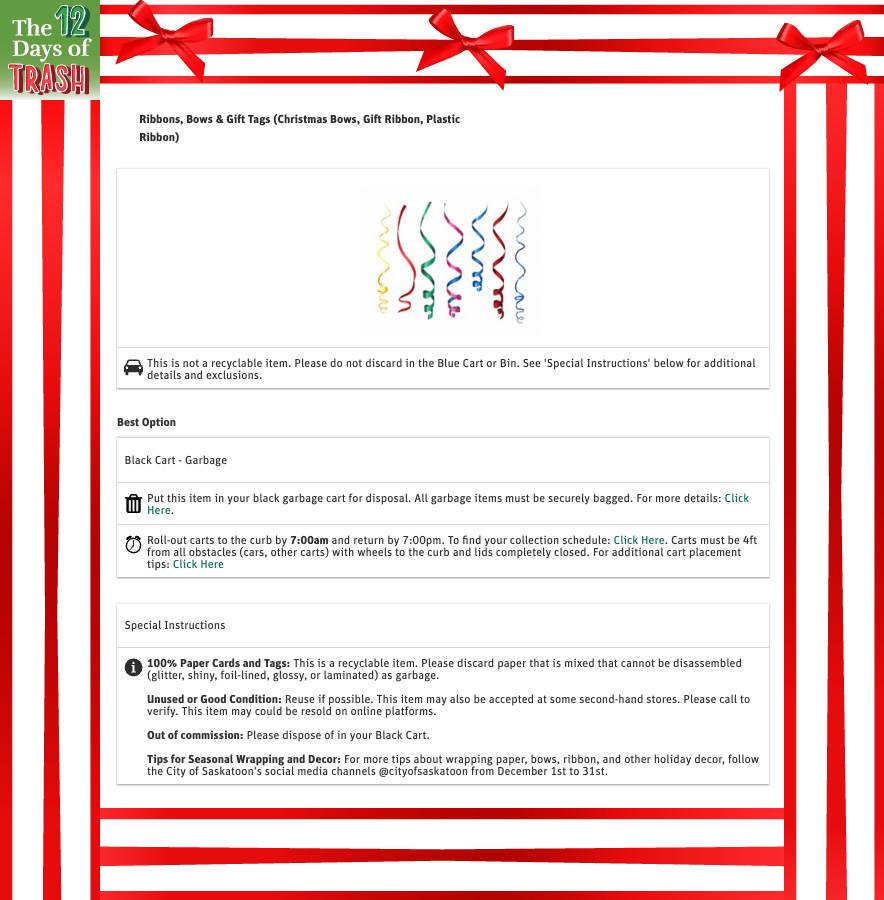
- Wrapping Paper & Gift Wrap: Often metal-faced or laminated, and not always recyclable
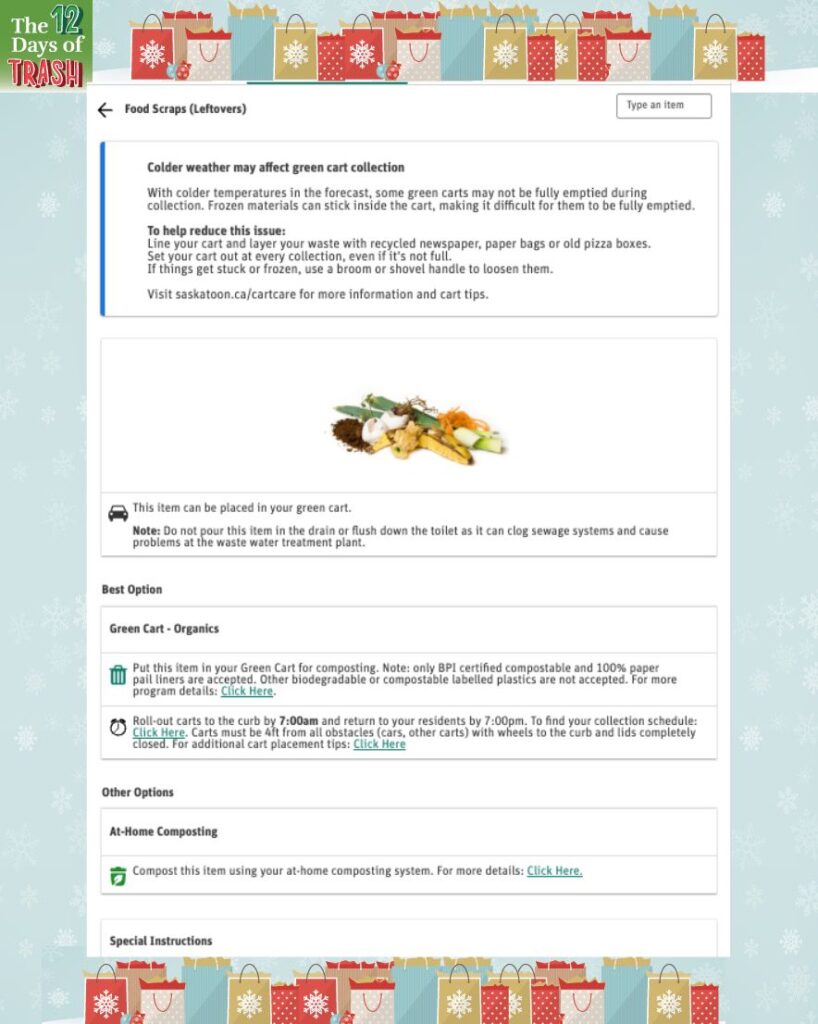
- Food Packaging & Food Waste: From prepared meals to leftover holiday dinners; includes foil trays, baked goods, metal tins, and mixed-material wrappers
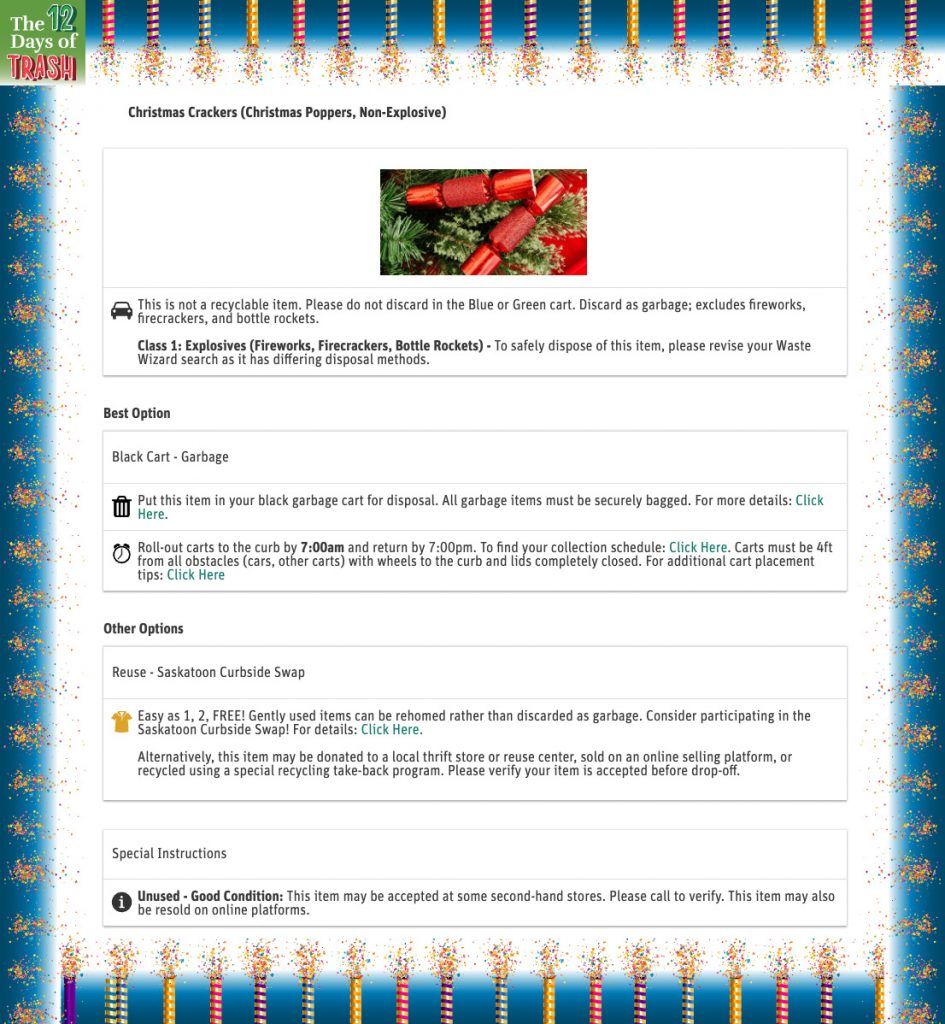
- Holiday Party Items (e.g. Crackers / Poppers) that come with novelty wraps or mixed materials
This set often confuses residents: what can be recycled, what needs composting, and what ends up in trash.
What works: Use a “waste wizard” tool (a simple app or web tool listing accepted materials) so residents can check on the spot what goes where. Provide seasonal guidance around packaging and food waste.
Days 9–12: Post-Holiday Cleanup & Special Waste Items
This phase deals with the cleanup aftermath — broken decorations, leftover food waste, wrapping materials, and excess trash generated from gatherings and seasonal turnover.
Holiday lighting, trees, mixed-material decorations, and bulky waste that doesn’t fit in bins need special pickup, bulk-waste scheduling, or notification to residents about drop-off locations.
What works: Communicate clearly and early (via newsletters, apps, signage) what collection schedules look like during holiday weeks, how to handle bulky waste, and encourage reuse or recycling where possible.
What Works: Tools & Strategies That Make a Difference
Based on what communities implementing 12 Days of Trash have learned:
- Clear Communication First: Use resident-facing tools to help people know what goes where. Avoid “wish-cycling.”
- Offer Special or Bulk Collection Options for items like Christmas trees, lights, and oversized waste.
- Leverage Digital Tools: Web apps, mobile “waste wizards,” and resident outreach tools help reduce confusion and contamination.
- Plan Ahead for Holidays: Schedule extra pickups or alternate collections to account for increased waste volume.
- Educate on Mixed Materials: Holiday waste often includes mixed material products — wrap, foam, metal wiring — which need special sorting.
- Consider CHaRM events: Communities benefit from specific hard-to-recycle collection events in which specialty processors can coordinate to collect everything from electronics to styrofoam or other tricky materials.
These strategies help reduce contamination, equipment damage, complaints, and unnecessary landfill waste.
Why It Matters — Beyond One Season
The “12 Days of Trash” isn’t just a holiday campaign. It’s a model for year-round waste education and smarter collection operations.
- It builds lasting resident awareness, making “proper disposal” a habit, not just a seasonal checklist.
- It helps reduce overall contamination rates throughout the year, not just during holidays.
- It strengthens trust in municipal and hauler services by reducing missed pickups, reducing overloaded bins, and offering transparency.
- It promotes sustainability — reusing, recycling, and reducing unnecessary waste.
As one wrap-up post from Routeware puts it: holiday waste may be seasonal, but contamination and confusion can last all year.
How to Use This Guide (For Municipal Leaders, Haulers, and Community Managers)
- Distribute Early: Share the guide with residents before the holiday season via email newsletters, community bulletin boards, social media.
- Embed into Resident Tools: If you already have a waste-service app or website, add a “Holiday Waste Guide” section for easy reference.
- Offer Special Collections: Schedule bulk-waste pickups for trees, lights, large decorations, and bulky trash well ahead of peak holiday volumes.
- Promote Recycling & Reuse: Encourage reuse of intact decorations, donating gently used items, and proper recycling of mixed-material waste.
- Track & Learn: Use data from your routes and collections to identify common waste offenders and adjust messaging or collection planning accordingly.
Final Thoughts
The holidays are a time for generosity, celebrations, and community; but they can also be a heavy burden on waste and recycling systems.
12 Days of Trash shows that with smart planning, clear communication, and simple tools, communities can navigate holiday waste without overloading bins or landfills.
***
This holiday season, let’s commit to smarter disposal, clearer communication, and better habits for the planet, for our crews, and for every resident who counts on reliable waste service.
Happy holidays, and let’s make the next 12 days a clean start.
***
Related Resources