Blog
Fuel Costs Are Climbing. Most Waste Operations Are Fighting the Wrong Battle.
by Routeware Team • March 23, 2026
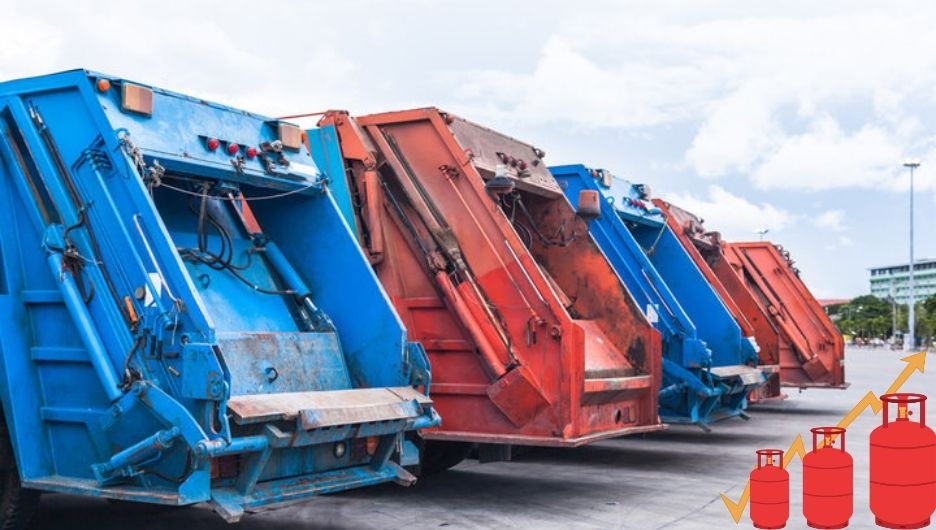
Fuel used to fluctuate.
Now it rises…and lingers.
You feel it in budget meetings. You see it in route profitability. You hear it from drivers when routes run long or inefficient. It’s no longer a temporary spike—it’s something operations have to design around.
And yet, most responses still focus on the obvious:
- Drive less
- Cut routes
- Raise prices
But that’s not where the real savings are hiding.
The real problem isn’t distance.
It’s everything that happens within the route.
Route Optimization Isn’t About Shorter Routes. It’s About Smarter Ones.
There’s a quiet assumption in a lot of operations: if the route gets completed, it’s “working.”
But working isn’t the same as efficient.
Routes drift over time:
- New customers get added without rebalancing
- Traffic patterns change
- Density shifts
- Driver workarounds become the “new normal”
What you end up with is a route that functions but burns more fuel than it should.
Routeware’s route optimization software doesn’t just build routes; it continuously reshapes them based on what’s actually happening in the field.
Not theoretical efficiency. Real-world efficiency.
That means:
- Fewer unnecessary turns
- Less backtracking
- Better sequencing of stops
- Routes that reflect how your operation runs today, not six months ago
Because when fuel costs rise, “good enough” routing gets expensive fast.
Idling Is Where Fuel Disappears
You don’t notice idling in a single moment.
But over a full day, across an entire fleet, it adds up to something significant.
It happens in small ways:
- A driver double-checking a stop
- Logging service manually
- Pausing to confirm what happened at the last pickup
- Breaking rhythm to record an exception
None of this feels major. But it slows everything down.
Routeware’s in-cab technology removes that friction:
- Drivers get clear, step-by-step stop guidance
- Service verification happens automatically
- Exceptions are captured instantly without interrupting flow
The route becomes smoother. Stops get tighter. Idling drops without anyone having to think about it.
And when that happens, fuel usage follows.
The Most Expensive Miles Are the Ones You Drive Twice
Ask any operation where fuel really gets wasted, and the honest answer is this:
Go-backs.
A missed pickup. A “not-out” dispute. A customer swears the bin was there. Dispatch sends a truck back: off route, behind schedule, burning fuel to redo work.
It’s one of the most expensive patterns in waste operations…and one of the most preventable.
Routeware tackles this at the source.
Clear Proof, Right at the Curb
With integrated camera and video systems:
- Drivers capture what actually happened at the stop
- “Not-outs” are documented automatically
- Customer disputes get resolved without sending trucks back out
No assumptions. No debates. No unnecessary fuel burn.
Smarter Recovery When Things Do Go Wrong
Not every issue can be prevented. But it can be handled better.
With dynamic dispatch:
- The closest available truck is reassigned
- Routes adjust in real time
- Recovery happens without blowing up the entire day
So even when there’s a disruption, it doesn’t spiral into wasted miles.
Static Routes Don’t Work in a Dynamic Day
Waste operations don’t run in a straight line.
Customers call in. Weather changes. Drivers get ahead or fall behind.
Without flexibility, every adjustment creates inefficiency:
- Trucks crossing over each other
- Stops handled out of sequence
- Extra distance that didn’t need to happen
Dynamic dispatch changes that.
Instead of forcing reality to fit the route, the route adapts to reality:
- Stops get reassigned intelligently
- Diversions are minimized
- Trucks stay moving forward, not zigzagging across service areas
It’s a small shift operationally, but a big one for fuel consumption.
The Problem That Starts at the Curb
Some fuel waste doesn’t start with your operation at all.
It starts with the customer.
- Bins not out on time
- Wrong materials in the wrong container
- Containers placed incorrectly
- Late set-outs after the truck has passed
Each one leads to:
- Slower stops
- Missed pickups
- Return trips
- Extra idling
And none of it is random. It’s a communication gap.
Routeware’s customer engagement tools close that gap:
- Automated pickup reminders
- Clear set-out instructions
- Real-time notifications when something goes wrong
- Self-service options that reduce confusion, call volume, and late dispatch calls
When customers do their part correctly, routes tighten up naturally.
No extra fuel required.
Fuel Efficiency Is a System, Not a Feature
There’s no single switch that fixes fuel costs.
But there is a pattern:
When routes are cleaner, stops are faster, decisions are smarter, and customers are aligned? Fuel usage drops.
Not because you forced it.
Because you removed the reasons it was high in the first place.
That’s the difference between reacting to fuel costs and actually controlling them.
The Takeaway
Fuel prices will keep moving. That part isn’t in your control.
What is in your control is how much waste exists inside your waste operation.
Routeware doesn’t approach fuel as a standalone problem. It treats it as the outcome of everything else:
- Routing
- In-cab execution
- Dispatch decisions
- Service verification
- Customer behavior
Fix those and fuel becomes a lot less volatile.
Because the cheapest gallon of fuel isn’t negotiated.
It’s avoided.
Calculate your costs (and opportunity costs) with the ROI Calculator now.