Blog
Why Your Municipality Needs a Resident Engagement Platform for Waste and Recycling
by Luke Van Engen • July 17, 2026
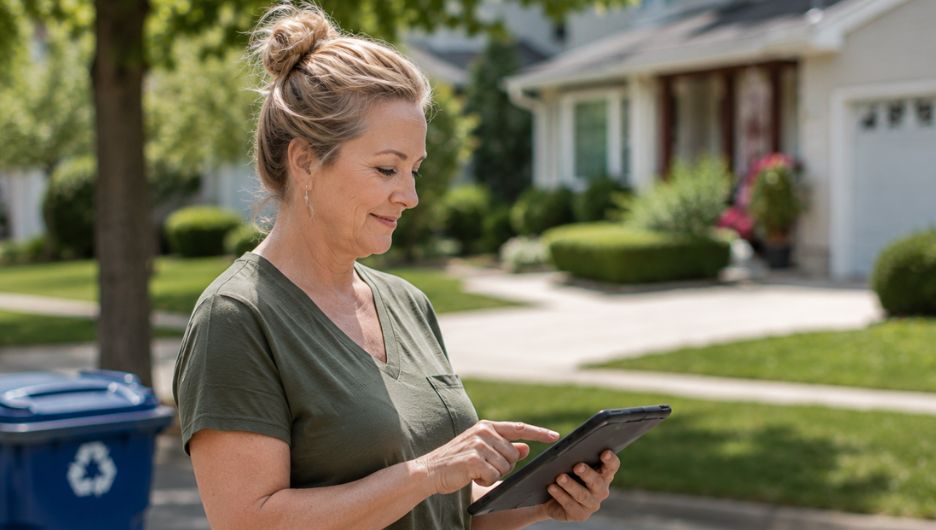
Somewhere in your community, a resident is holding a greasy pizza box and trying to decide which bin to toss it into. That single moment of uncertainty, repeated across thousands of households, is often where recycling contamination begins.
Contamination remains one of the most persistent and expensive challenges in waste and recycling, but it usually not because residents are indifferent. More often, it comes from people who want to do the right thing but cannot easily find a clear answer. When they guess incorrectly, the effects are downstream: higher processing costs, entire truckloads of good recyclables spoiled, diversion targets missed, and more phone calls from residents asking the same questions in different ways.
Fixing the problem does not mean hiring more people or printing more mailers. It means giving residents useful information at the moment they are making a decision. That is where a resident engagement platform for waste and recycling can make a meaningful difference.
Key Takeaways
- A resident engagement platform for waste and recycling is a digital hub that helps residents recycle correctly, check schedules, and manage their own service.
- It reduces contamination at the source by giving residents an accurate answer at the moment of decision instead of leaving them to guess.
- It cuts inbound call volume by moving routine questions to self-service tools available around the clock.
- It provides direct data on what residents are confused about, so outreach lands where it is needed.
The Resident Engagement Platform for Modern Waste Programs
A resident engagement platform is a centralized digital communication solution designed to help a community recycle correctly and generate less waste. Built for the public sector rather than adapted from a general tool, it pulls several resident-facing capabilities into one accessible hub, replacing the scattered mix of static web pages, printed calendars, and inbound phone calls most programs still rely on.
The difference that matters is between broadcasting and engaging. A mailed calendar or a page buried in the city website pushes information outward and hopes it reaches the right person at the right time. A resident engagement platform works the other way around. It lets residents pull the exact answer they need, when they need it, in the moment they are standing over the bin. Routeware ReCollect is one such platform, used by hundreds of municipalities and haulers across North America to move resident communication off paper and into something residents actually use.
Why Traditional Waste Communication No Longer Works
Most programs still lean on three tools: a page on the city website, printed mailers and paper calendars, and a customer service line to catch everything else. Each carries a weakness that grows more expensive every year.
Printed materials go out of date the moment anything changes. A calendar mailed in winter cannot reflect a holiday shift or a weather disruption months later, and reprinting is slow and costly, so residents end up holding information that is simply wrong and acting on it. A website page stays more current, but a dense list of disposal rules is hard to search in the moment, and it rarely answers the specific question about the specific item in a resident’s hand.
The real cost is the friction these create. When a resident cannot quickly find an answer, they guess or they call, and both land back on the operation. A wrong guess becomes contamination that raises processing costs and can spoil a full load. A call consumes staff time on a question that never needed a person. Residents now expect to handle this the way they handle banking or parcel tracking, on their own, online, at any hour, and a program that cannot offer that is spending money to deliver a worse experience. A resident engagement platform closes that gap and takes a repetitive load off the people currently answering the same questions all day.
The Building Blocks of Resident Engagement
Each tool in a resident engagement platform earns its place by removing a specific reason a resident would otherwise guess or call. Routeware ReCollect brings the main ones together in one hub.
- Digital collection calendar: A resident enters an address and sees a personalized schedule for every stream the city runs, garbage, recycling, yard waste, and organics, drawn from their exact location. It updates automatically for holiday shifts, such as pushing service out a day for a public holiday and surfaces upcoming events like a household hazardous waste collection. No reprint cycle, no outdated paper on the refrigerator.
- Searchable disposal guide: Often called a waste wizard, this lets a resident type in almost any item and learn precisely where it goes, curbside recycling, trash, or a specific drop-off. It tolerates typos, so a rough search still returns the right answer. It also does more than sort into bins. A search for clothing can explain that textiles do not belong at the curb and point to a local donation option, reinforcing reuse over disposal. Because it can be set to match the exact rules of the local recovery facility, the guidance is accurate for that community rather than generic.
- Custom-branded mobile app: Rather than a generic third-party download, the platform can launch as the city’s own app for iOS and Android, carrying its name, logo, and colors. That branding does real work, because residents trust and act on information that visibly comes from their own city. The app becomes one home for the calendar, the disposal guide, and service alerts.
- Interactive sorting game: A browser-based game that has residents sort materials into the correct streams turns education into something people choose to engage with. It works especially well for school outreach, building correct habits early and reaching an audience conventional communication almost never does.
- Online service requests: A resident portal lets residents schedule and, where applicable, pay for special collections themselves, a bulky item pickup or a yard waste removal, without a call. These sit alongside the platform’s broader self-service tools, designed to take routine transactions off the phone line entirely.
From Reactive Damage Control to Proactive Communication
The most valuable shift the platform enables is moving from reacting to problems toward preventing them. Residents can opt in to reminders through whichever channel they prefer, email, text, automated call, or push notification, so the right bin reaches the curb on the right day. That alone prevents a large share of missed set-outs before they happen.
The same channel becomes essential when something goes wrong. When a storm disrupts collection, when high winds mean carts should come back off the street, or when a truck breaks down and a route runs late, an administrator can push an instant alert. One notification heads off the wave of calls a silent delay would otherwise produce, resident after resident asking why the trash has not been picked up, all morning.
It also carries education without adding noise. Instead of extra messages residents learn to ignore, a city can attach a short, focused campaign to reminders residents already receive, and time it to the contamination it is actually seeing. Around major online-shopping holidays, the message can focus on breaking down cardboard. Ahead of an election, it can address disposing of yard signs. Through the winter holidays, it can target the string lights and other tanglers that jam recycling equipment. Each message is timely, specific, and tied to a real problem, which is what makes it change behavior. This proactive approach is central to Routeware’s wider customer education and outreach capabilities.
Turning Resident Behavior Into Better Decisions
The platform does more than answer questions. It reveals what residents do not understand. Every search, game, and service request generates data in the analytics, a continuous read on resident behavior no printed calendar could ever produce.
That data shows which tools residents use, whether they favor the app or the embedded web widget, and which languages they interact in, which by itself can reshape how a city designs outreach. The most useful view is the list of most-searched items in the disposal guide. A rise in searches for mattresses, for a particular plastic, or for seasonal yard waste points directly to where the confusion sits, so outreach money answers the questions residents are genuinely asking rather than the ones assumed on their behalf. The platform can also log searches for items not yet in the guide, a feedback loop that steadily builds a more complete, hyper-local reference. Communication stops being a broadcast sent into the dark and becomes a response to what the community is asking for.
Fewer Wrong Bins, Fewer Phone Calls
Most resident communication is reactive by default. The calendar goes out, and the calls start when it turns out to be wrong. The contamination reaches the facility before anyone knows which neighborhoods are struggling. The outreach campaign launches on a hunch and leaves no way to tell whether it worked. Each of these is a city cleaning up after a problem that has already happened.
A resident engagement platform reverses that order. The answer reaches the resident before the wrong item goes in the bin. The alert goes out before the phone lights up. The campaign targets the confusion the data has already exposed, and its effect shows up in what residents search for next. A program stops paying to fix mistakes and starts preventing them, which is both cheaper to run and far less exhausting to manage.
This is also what ties together goals that usually live in separate offices. Cleaner recycling, lower operating cost, and a resident experience that holds up against what people expect from every other service become results of the same decision rather than competing priorities. Meeting residents in the moment they are deciding, on their phones and on the city website, is how good intentions turn into correct behavior across an entire community. To see what that looks like in practice, explore Routeware ReCollect
Frequently Asked Questions
It is a digital communication solution that helps residents recycle correctly and manage their own waste service, combining a collection calendar, a searchable disposal guide, service alerts, and self-service requests in one branded hub. It is built specifically for municipalities and haulers to modernize how they reach residents.
It gives residents an accurate answer at the exact moment they are deciding where an item goes, rather than leaving them to guess. By making correct disposal easy to look up and reinforcing it with targeted, timely reminders, it stops contamination before the wrong item reaches the bin.
Yes. When residents can check their schedule, look up how to dispose of an item, and request special collections themselves at any hour, routine questions move away from the call center, freeing staff to focus on issues that genuinely need a person.
Common tools include a digital collection calendar, a searchable disposal guide, a custom-branded mobile app, multi-channel reminders and service alerts, online service requests, and an interactive sorting game for education. Platforms like Routeware ReCollect bring these together in one hub.
It shows a city what residents are actually searching for and confused about, so outreach targets real knowledge gaps rather than assumptions. Cities can attach short, seasonal educational messages to reminders residents already receive, addressing specific contamination issues without sending extra communications.
About the Author

Luke Van Engen
Luke Van Engen is the Director of Demand Generation at Routeware, where he focuses on helping waste and recycling organizations connect with the technology and information they need to serve their communities more effectively. His background in B2B technology marketing gives him a practical perspective on the challenges facing waste haulers, municipalities, and public works teams.
 North America
  United Kingdom