Blog
Your Guide to Waste Collection Efficiency: Doing More with Less in Your Community
by Aidan McLennan • October 13, 2025
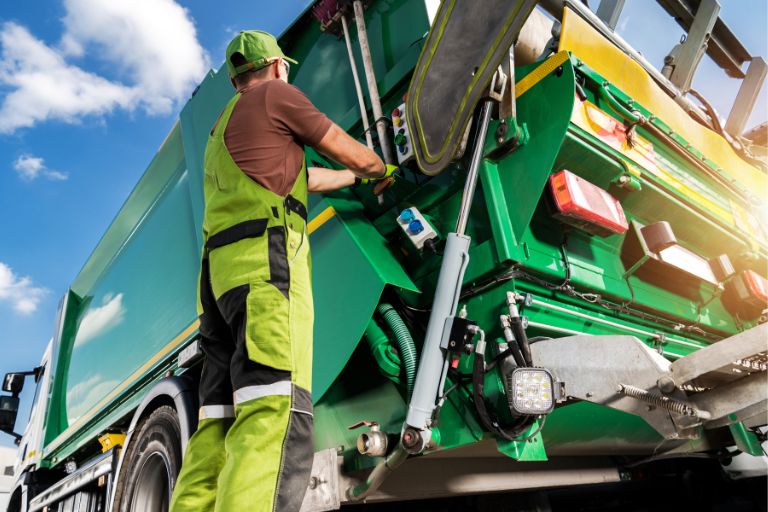
If you manage waste collection in Portland, Oregon, or oversee city services in Toronto, Ontario, one challenge remains the same: how to make waste collection efficiency a daily reality.
Across North America, local governments and private haulers are rethinking their approach to waste collection efficiency. The goal is to build cleaner, smarter, and more sustainable communities. This is done through efficient waste management systems that reduce waste of every kind, from time and fuel to emissions and money.
Key Takeaways
- Waste collection efficiency refers to achieving the same or an improved level of service by using less of various resources such as time, fuel, trucks, and labour, not just by speeding up the collection process.
- The greatest benefits are achieved when optimized routes, the latest data, and involvement of the residents all work together, not through any one particular measure.
- Efficiency is evident in the community through cleaner air resulting from fewer miles travelled, fewer missed pickups, lower operating costs, and safer crews.
- The most efficient operations regard routing and review as being continuous and keep updating the routes as changes take place in population, traffic, and participation.
What Is Waste Collection Efficiency?
In simple terms, waste collection efficiency means using fewer resources to achieve better results.
It’s about optimizing waste collection routes, managing driver time effectively, and minimizing fuel use, all while maintaining high service quality.
An efficient waste management system focuses on trucks and bins. It also connects planning, people, and data to create smoother waste management operations.
Why Waste Collection Efficiency Matters
Improving efficient waste management benefits your operations team and has a ripple effect across your entire community:
- Cleaner air and reduced emissions – Optimized routes mean fewer miles driven, lowering your city’s carbon footprint.
- Happier residents and businesses – Predictable pickups and fewer missed collections improve customer service and public satisfaction.
- Lower operational costs – Reduced fuel use, maintenance, and overtime translate to real savings.
- Safer crews and streets – Improved operations reduce rushed driving and on-route stress, leading to fewer incidents.
Waste collection efficiency isn’t just about doing more — it’s about doing better.
Steps Toward More Efficient Waste Management
Building a more efficient waste management system doesn’t happen overnight. But consistent, data-informed steps can deliver major gains. Below are just a few steps you can take to build better waste collection efficiency:
- Regularly Review Routes
Routes that worked five years ago may no longer reflect today’s population or traffic patterns. Periodic analysis can uncover wasted miles and outdated routes. - Engage the Community
Educating residents about sorting rules and collection schedules minimizes contamination and rework. Small improvements that lead to major efficiency gains. - Use Data to Drive Improvement
Tracking fuel use, idle time, and completion rates with reliable fleet and equipment reporting helps identify trends and target areas for optimization. - Invest in Your People
A well-trained team is the foundation of an efficient waste management operation. Training, communication, and feedback loops enable crews to make smart, safe choices on every route.
Traditional vs Efficient Waste Collection
The change to more efficient waste collection affects the way the operation functions at all stages, and as a practical introduction, our guide to improved collection routes explains how.
| Traditional waste collection | Efficient waste collection |
|---|---|
| Routes left unchanged for years | Routes reviewed and rebalanced with current data |
| Fuel, idle time, and completion tracked loosely | Fleet data used to target waste and inefficiency |
| Residents call in; contamination handled after the fact | Resident education cuts contamination and rework |
| Success measured by trucks out and back | Success measured by cost per stop, miles, and go-backs |
| Higher cost, more emissions | Lower cost, fewer emissions, better service |
The Future of Efficient Waste Management Systems
The future of waste collection efficiency is intelligent and interconnected. Across the U.S. and Canada, municipalities and waste haulers are taking steps to improve waste collection efficiency by increasingly turning to data, automation, and real-time insights for better route planning and faster response time, and, ultimately, reducing their environmental impact.
But even as waste management software evolves, one truth remains: the most efficient waste disposal systems are built on collaboration between city leaders, operators, and the communities they serve.
No matter the size of your operation, one question leads the way forward:
How can we collect smarter — not just faster?
Get Started with Routeware’s waste management solutions today.
Frequently Asked Questions
Waste collection efficiency means achieving the same or better level of service by using less of a range of resources including time, fuel, trucks, and labour. It achieves this by linking together routing, fleet data, and human resources so that the operation can do more with less rather than just running faster or adding more trucks.
The key measures involve improving routes and regularly checking them, using data from the fleet to identify wasted miles and idle time, getting the residents involved in reducing contamination and in modifying the routes, and making sure that the crews are well trained. It is not possible to achieve the results with any one of these measures; the benefits are obtained by combining them and keeping the routes up to date as the circumstances change.
The most clear-cut indicators are cost per stop and cost per ton, route mileage and fuel consumption, the go-back rate for stops that are missed or disputed, and the rates of contamination and diversion. It is only by monitoring these figures that efficiency can be transformed from a general aim into one that a city or a hauler can improve and demonstrate over time.
It reaches beyond the operations team. Fewer miles mean cleaner air, predictable pickups mean happier residents, lower fuel and overtime mean real savings, and less rushed driving means safer streets. Efficiency is as much a community benefit as an operational one.
Data is what makes efficiency measurable and repeatable. Tracking fuel, idle time, completion rates, and route performance shows exactly where waste happens, so teams can target it; it’s also central to where waste technology is heading.
About the Author

Aidan McLennan
Aidan McLennan is the Senior Demand Generation Manager at Routeware, where he focuses on connecting waste management and fleet operations professionals with insights that help them modernize their operations. With a background spanning content strategy, ABM, and marketing operations in B2B SaaS, he writes about the intersection of technology, efficiency, and the infrastructure that keeps communities running. Based in Simcoe County, Ontario, he sees firsthand how the services Routeware supports shape the places people actually live.
 North America
 United Kingdom