Blog
From the Cab to the Cloud: A Conversation with Ryan Purcell, Technical Account Manager
by Routeware Team • June 22, 2026
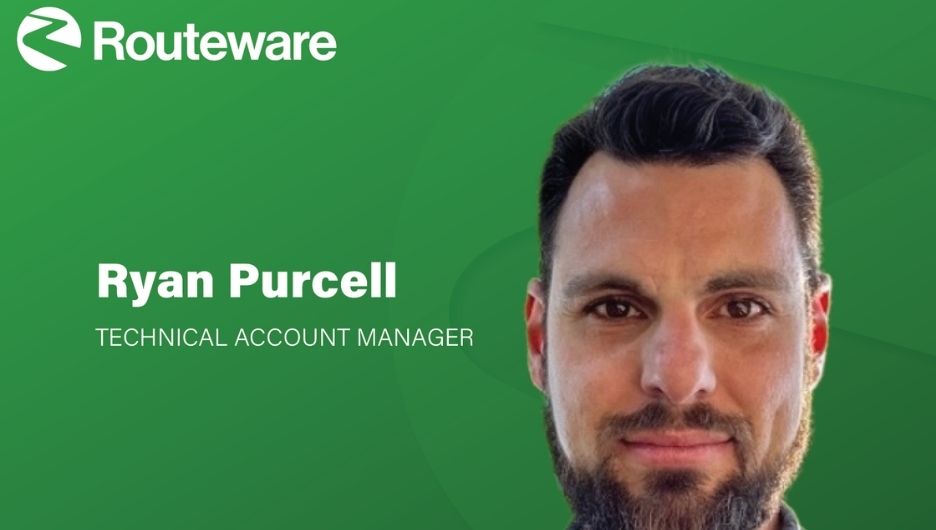
Before Ryan Purcell was helping cities optimize their waste operations in SmartCity, he was doing something surprisingly similar in a different industry altogether: heavy haul trucking technology. The parallels turned out to be closer than most people would expect — and they’re a big part of why he’s so good at his job.
We sat down with Ryan to talk about the metrics that matter most, what a summer heatwave means for drivers and dispatchers alike, where camera technology is taking the industry, and why the biggest mistake operators make has nothing to do with the software they choose.
The metric that tells the whole story
If Ryan could only look at one number to gauge how well an account is performing, he knows exactly what he’d check: route completion data on the Route Tracker page in SmartCity.
“Route completion percentages, paired with issues reported per route over time — that’s your baseline. That’s how you know if an account is doing the fundamentals or not.”
— Ryan Purcell, TAM
It sounds straightforward, but there’s real depth to it. Completion rates don’t just show whether trucks finished their routes — they reveal engagement trends over time. A team that starts strong and gradually slips in completion percentage is telling a story that warrants a conversation. One that shows consistent improvement is a team that’s getting the hang of it. The data doesn’t lie.
Pair that with issue reporting volume and you start to see the full picture: not just whether the work got done, but how much friction the team encountered along the way.
When the temperature climbs, so does the complexity
There’s a part of Ryan’s work that rarely makes it into a product demo: helping cities manage mandatory heat break policies for drivers during extreme summer weather. It’s not a flashy use case — but for the drivers behind the wheel of older trucks with no air conditioning, it’s a serious quality-of-life issue.
WHY IT MATTERS
Cab temperatures in older garbage trucks can exceed 100°F in summer heat. When a city mandates heat breaks above a certain temperature threshold, drivers need to know where to go — and supervisors need to know they got there. SmartCity can support both sides of that equation using City Alerts and Geofences as a workaround workflow.
While it’s not a purpose-built feature, the workaround Ryan has helped clients implement uses City Alerts and Geofences to identify designated rest spots around the city and create a reporting mechanism to confirm compliance. It’s one of those moments where creative configuration turns a real operational need into something trackable — and where the human side of waste collection gets the attention it deserves.
The trends shaping the next few years
Ask Ryan where the industry is heading and two themes come up immediately: camera technology for pickup verification, and AI-powered contamination detection. They’re related — and together, they’re responding to a wave of regulatory pressure that’s only going to intensify.
- Pickup confirmation cameras: On-truck cameras capturing image evidence at the point of collection — automating exception documentation.
- AI contamination detection: Computer vision identifying contaminated loads in real time — reducing manual inspection and improving compliance.
- Contamination regulation: States like California, Oregon, and Washington are leading new mandates around waste contamination tracking and reporting.
Currently, contamination tracking is largely a manual process — slow, inconsistent, and difficult to scale. Camera technology has the potential to change that equation significantly. For cities facing regulatory deadlines, it’s not a matter of if they’ll need a solution, but when.
The strategic mistake most operators make
Ryan has seen a pattern in how organizations evaluate technology, and it concerns him a little. The instinct is almost always reactive: how do we prove we didn’t miss that pickup? How do we satisfy this new regulation? Those are valid questions — but they’re the wrong starting point.
“Operators need to think beyond the system they’re buying. Can it integrate with other platforms? Does it handle operational data and resident engagement, or just one?”
— Ryan Purcell, TAM
The distinction Ryan draws is between tools built for collecting accurate data — like SmartCity — and tools built for community education and engagement — like ReCollect. Operators who recognize that they need both, and plan for how those systems will work together, are the ones who set themselves up for long-term success. Operators who buy reactively often find themselves stitching things together after the fact.
Which brings him to a related opportunity he sees going underutilized at almost every account he works with.
The untapped opportunity hiding in plain sight
Two things stand out to Ryan as consistently underused: the community engagement capabilities inside ReCollect, and the go-back tracking and charging workflow in SmartCity and RCC.
Go-backs — when a truck has to return to a property because a resident forgot to put their bins out, or a pickup was genuinely missed — are a real operational cost. Most haulers absorb that cost without question. But SmartCity and RCC can track every one of them, and that data can support a workflow where customers are charged for repeat service calls they caused. It’s a revenue opportunity that most operators don’t know they’re sitting on.
On the ReCollect side, the resident-facing engagement tools — reminders, policy updates, community education — are frequently configured and then forgotten. Ryan sees a lot of room to help customers get more out of what they already have.
What he’s most excited about
When it comes to what’s coming on the product side, Ryan doesn’t hesitate: the integration of Sigma’s custom reporting tool across platforms beyond Elements is the thing he’s watching most closely heading into the coming year.
“Custom reporting is a huge need and something we’re currently very limited in. Sigma is going to be a big lift internally, but the payoff for customers will be significant.”
— Ryan Purcell, TAM
He’s candid about the ramp-up that comes with it — Sigma isn’t always intuitive out of the gate, and there’s meaningful internal training ahead. But the end state is something customers have been asking for: the ability to build and customize their own reports in a way that actually fits their operations, rather than working around the constraints of out-of-the-box reporting.
Five things that would make customers better served
Ryan thinks about this systematically. He’s identified five areas where Routeware could meaningfully improve the customer experience:
- Listen more deeply to customer feedback and act on it visibly.
- Provide clearer, more reliable roadmap communication.
- Create dedicated product user groups and beta testing cohorts.
- Improve how new releases are rolled out to minimize disruption.
- Build a stronger internal knowledge base so accounts get faster, more consistent answers.
Why he’s in this industry
For Ryan, the move from heavy haul trucking to waste management wasn’t as unexpected as it might sound. The use cases overlapped more than people realize — fleet management, in-cab technology, operational data, driver workflows. What he didn’t fully expect was how much he’d enjoy the people.
“Waste management customers are generally down-to-earth people trying their best to use technology to better serve their employees and communities. That’s a great group to work with.”
— Ryan Purcell, TAM
There’s also something he finds genuinely interesting about the dynamic of being in a tech-forward role serving an industry that is — with notable exceptions — still finding its footing with technology adoption. It creates real opportunity to make a tangible difference, not just deliver software. When a city sees value in something they never thought to track before, that moment doesn’t get old.
Ryan Purcell is a Technical Account Manager at Routeware, where he works with municipalities and private haulers to drive performance through SmartCity, ReCollect, and the broader Routeware platform. This post is part of Routeware’s ongoing employee spotlight series.
 North America
  United Kingdom