Blog
Customer Engagement Is Becoming Waste & Recycling’s Biggest Competitive Advantage
by Routeware Team • March 9, 2026
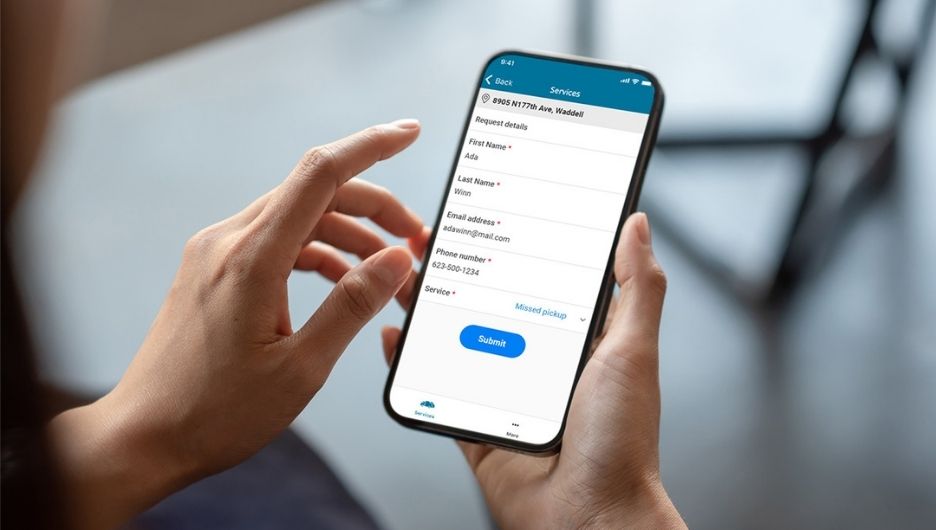
For years, waste and recycling operations competed on the same fundamentals: routes, assets, pricing, and contracts. Efficiency mattered most. Scale often won.
But today, something quieter (and far more powerful) is reshaping the industry: Customer engagement. Not marketing engagement. Not social media engagement. It’s operational engagement: how your customers experience your service every single week.
Because in an environment defined by rising costs and labor challenges, along with rising service expectations, the haulers who communicate best are increasingly the ones who grow and protect margin best.
And at the center of that communication is something the industry has historically underinvested in: waste management customer education. When customers understand why a pickup was missed or how to prepare materials correctly, they make fewer mistakes and generate fewer calls.
The haulers pulling ahead are running tighter routes. They’re also building smarter touchpoints and recognizing that customer education in waste management is one of the most cost-effective investments they can make.
Service Expectations Have Permanently Changed
Municipalities and commercial customers now expect the same visibility they get from logistics companies and utility and delivery providers.
They want to know:
- When their service occurs
- Why a service was missed
- How issues are being resolved
- Who to contact
And they want it all without friction. When visibility doesn’t exist, frustration fills the gap.
Missed pickups become complaints. Complaints become churn risk. Churn becomes lost revenue.
This is where customer education in waste management becomes operational. Proactive communication isn’t just good customer service; it’s a competitive advantage. It’s how you prevent a missed pickup from becoming a canceled contract.
The reality is simple: service quality is now measured by communication as much as collection performance.
Engagement Reduces Operational Cost, Not Just Complaints
Customer engagement is often viewed as a “nice-to-have” experience layer. In practice, it’s an operational lever.
When customers are informed proactively:
- Call volumes drop
- Dispatch interruptions decrease
- Driver distractions decline
- Billing disputes shrink
- Service recovery becomes faster
Every inbound call avoided saves staff time. Every resolved issue without escalation protects margin.
This is the core argument for waste management customer education: informed customers don’t call. They don’t dispute. They don’t escalate. They just put the bin out and move on.
The result is happier customers and a more stable operation, which in turn leads to happier partners and staff.
The Shift From Reactive to Proactive Service
Historically, engagement happened after something went wrong.
Modern operators are flipping that model. Instead of reacting, they notify customers automatically:
- Service delays due to weather
- Route changes or holiday schedules
- Contamination issues
- Confirmed service completion
This proactive approach changes the relationship entirely. Customers stop wondering if service will happen and start trusting that it will.
And trust is the whole game in a service business. It reduces calls and makes renewals easier. It’s also the foundation of effective customer education in waste management. Because proactive communication earns the attention that education needs to make an impact.
Engagement Builds Contract Defensibility
In competitive bids and renewals, pricing still matters. But increasingly, decision-makers evaluate resident satisfaction and transparency alongside cost.
Municipal leaders face public pressure when service complaints rise. Commercial customers feel disruption immediately when waste service fails.
Haulers who provide visibility, reporting, and communication tools create something difficult for competitors to undercut: Confidence.
That’s what effective waste management customer education delivers at the contract level. When customers feel informed and supported, switching providers becomes riskier even if another bid appears cheaper on paper.
Drivers Benefit Too
Customer engagement isn’t only external.
When communication flows clearly between operations and the cab, drivers deal with:
- Fewer surprise complaints
- More consistent route expectations
- Route expectations get documented automatically
- Less time is spent explaining issues in the field
That reduction in friction is important. In today’s labor environment, anything that makes a driver’s day more predictable improves retention, and retention is one of the hardest problems in the industry right now.
Engagement Is Now Part of the Operating Model
The waste industry is moving beyond collection as a commodity service.
The next generation of leading haulers treats engagement as infrastructure, no different than routing and fleet management.
Because the competitive question is changing from “Can you collect the waste?” to “Can you deliver a predictable, transparent service experience with quantifiable metrics?”
Customer education in waste management is a big part of that answer. Informed customers generate fewer exceptions and require less support.
Operators who make that shift are seeing stronger retention and more resilient margins. Those who don’t are competing on price alone.
The Bottom Line
Customer engagement doesn’t add complexity. Instead, it removes uncertainty for customers, drivers and waste managment teams alike.
In a market where costs continue to rise, differentiation rarely comes from doing more work. It comes from delivering a better experience around the work already being done.
The haulers winning on retention aren’t doing more collections. They’ve invested in waste management customer education and proactive communication
And increasingly, that experience is what customers remember most.
Fill out the form below to start your differentiation process today.