Blog
Operational AI: Closing the Blind Spot in Waste Collection
by Katie Kinnear • November 2, 2026
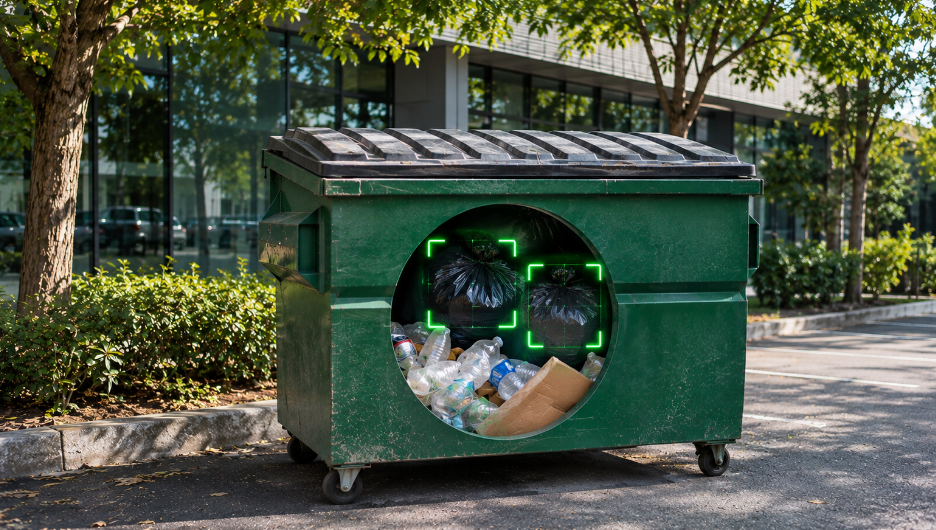
A collection truck works hundreds of stops a shift, but picking up waste is only one part of its job. Useful intel includes whether the bin was overflowing, whether the stop was successfully serviced, or whether the recycling cart held the wrong material. The moment of potential data capture is over almost as fast as the cart tips into the hopper, lives only in the driver’s memory, and is gone by the next street. Billing never sees the reality of what happens on the curb. Neither does the recycling team, or whoever picks up the phone when a resident complains.
Operational AI closes that knowledge gap. It is AI applied to the daily running of a waste operation, from routing and driver safety to what happens at the cart. At the curb, computer vision trained on the collection itself turns cart activity into structured, verifiable information the office can use. Evidence that used to stay on the route, beyond the reach of any reporting system, can now be analyzed across teams.
Key Takeaways
- Operational AI applies AI to the daily running of a waste operation, including routing, driver safety and collection. At the curb, it uses computer vision to record what happens at the cart, a part of the job that billing, routing and dispatch software never reached.
- It runs on cameras the fleet already owns and records each collection as a data point fixed to its address, stop and time.
- The value is in reducing potential operational costs: proof of service settles disputes, overflow detection recovers unbilled revenue, and contamination caught at the source protects recycling loads.
- Captured over time, the record turns predictive, showing where contamination concentrates, which accounts overflow by season, and which neighborhoods have drifted away from recycling.
- The constraint was never capturing data. A Routeware survey found most leaders still work from spreadsheets, so the win is the one record the industry could never capture, landing where the operation already works.
What Is Operational AI in Waste Collection?
Operational AI in waste collection is AI put to work on the operation itself, from planning routes to flagging risky driving to reading what happens at the curb. At the curb, it takes the form of computer vision that uses cameras a fleet already runs for safety and liability and asks them a new question: not what is on the road ahead, but what is in the cart being emptied. Is the stop served. Is the container past full. Does the load hold material that should not be there. The driver does nothing, and what comes back is a structured record, not a clip for review: one address, one stop, one time, ready for the back office to act on.
If Waste Operators Already Have the Data, Why Is It Stuck?
The problem was never capturing data, it was connecting it. In a Routeware operational intelligence survey of 154 leaders across waste and recycling, capture was not the bottleneck at all: 79% still move their operational data into spreadsheets, and two in three lose ten hours a week or more building reports by hand. The missing piece is getting the right curbside intel to the function that can use it, the same gap operations software has worked for years to close across billing, routing and the service desk.
How Does Operational AI Recover Revenue and Prove Service?
Operational AI turns three moments at the curb into revenue and proof: a served or skipped stop, an overflow, and a contaminated load. Each one lands on a cost or a dispute the operation is already carrying.
| Capability | What operational AI records | The line it moves |
|---|---|---|
| Proof of service | A served or skipped stop, with time and image | Fewer credits and return trips on missed-bin disputes |
| Overflow detection | An overflow measured and tied to the account | Unbilled service recovered as revenue or a container upsize |
| Contamination detection | The wrong material, named and tied to the household | Cleaner loads and protected diversion |
Proof of service effectively handles the call every operation knows, some version of you skipped my bin, with a time and an image in place of a credit given on the customer’s word. Overflow turns a pickup the crew already makes for free into revenue the business was earning and never billing. Contamination carries the longest tail, since one cart of the wrong material can drag a whole load down a grade, so catching it at the source and sending resident recycling education only to the homes responsible protects the clean material behind it. On a municipal contract, the same verified records are the performance evidence an audit or a renewal asks for.
What Can Operational AI Predict Over Time?
Over time, operational AI shifts from recording the route to predicting it. A truck that reads every cart becomes more than a list of stops, because it covers every property on its route several times a month, across seasons and years, more often and more evenly than any survey or sensor rollout a city could fund. Let the records build and the patterns surface: recycling contamination that concentrates on certain streets and certain weeks, overflows tied to particular businesses, set-out rates that mark the areas drifting away from the blue cart. The operation moves from answering for last week to planning next month, and that is where operational AI turns from a feature into infrastructure.
How Do WasteVision AI and Routeware Work Together?
Reading the curb and running the business are two different jobs. WasteVision AI is the computer vision side: its onboard system watches the cart as it empties into the hopper and turns what it sees into plain data, namely any costly contamination in the load. Routeware is the operations side, the platform that bills, routes and manages customers. The WasteVision AI and Routeware integration hands each reading from one to the other, so a contamination finding made at the curb reaches billing, outreach or the service record without anyone retyping it. One side sees, the other acts.
What Will Operational AI Mean for Waste Collection?
The operators who pull ahead over the next decade of waste collection will be the ones who put what their trucks already see to work. A collection truck has always been measured by the weight it moves. The trucks that matter next will be measured by what they record on the way: a fleet that reads every cart it services, on routes it already drives, builds a view of its service area that an operation without the habit cannot buy back later. Owning the cameras is the easy part. The advantage goes to the operators who turn what the cameras already see into decisions, route after route.
Frequently Asked Questions
It flags the things that happen at collection and usually go unrecorded: a container that is overflowing, a cart with the wrong material in it, and whether a stop was served or skipped. Each one is tied to the address it came from.
No. The driver does nothing differently. The cameras capture the collection on their own, so it adds no steps to a route the crew is already running.
Yes. A hauler uses it to recover revenue and settle disputes, and a municipality uses it to prove service and keep recycling clean. The capability at the curb is the same for both.
No. It runs on the cameras most fleets already fit for safety and liability, reading the cart instead of the road, so there is no new vehicle to buy and nothing for the driver to operate. A fleet can start with the trucks it has and add the capability over time.
No. What it produces is structured data, not video to sit and watch. Each result is pinned to an exact address, stop and time, so it files itself to billing, outreach or the service record with no one reviewing clips, which is what lets it keep up across a route of hundreds of stops.
About the Author

Katie Kinnear
Katie Kinnear is Director of Brand Strategy at Routeware, where she leads brand, messaging, events, and communications efforts across the company’s full product suite. A 2024 Waste360 40 Under 40 honoree, she is passionate about advancing meaningful dialogue around circular solutions, smart city technology, and the future of waste and recycling. Katie serves on the boards of the Utah Recycling Alliance and Recycle Utah, extending her commitment to sustainability beyond the workplace and into her community.
 North America
 United Kingdom