Blog
Dynamic Route Optimization: Why Static Routes Fail Municipal Fleets
by Luke Van Engen • July 27, 2026
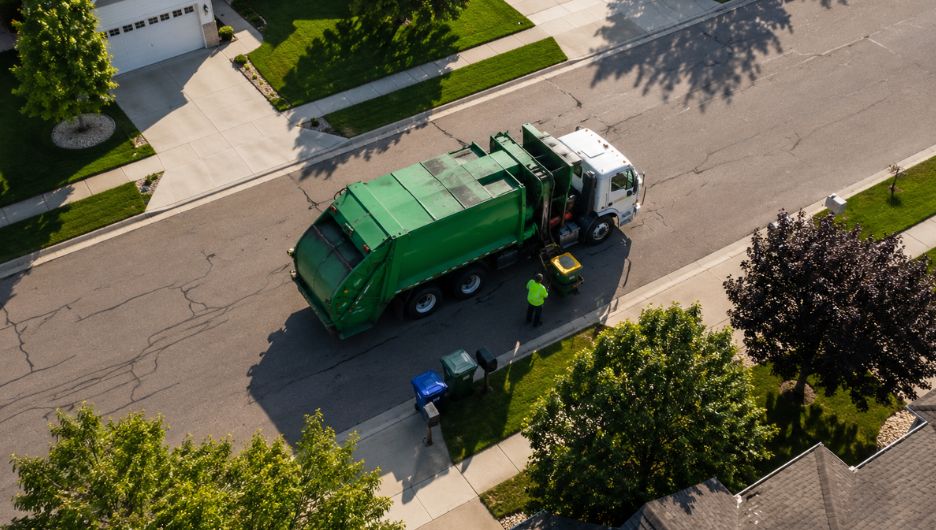
When a city designs a collection route, they may be accurate the day they go into service, but they become a little less so with every change that follows.
A new subdivision opens. A neighborhood fills in. A service areas shift. A truck breaks down. A resident sets out a bin on the wrong day. The route was built for the city as it existed on one moment in time, but cities rarely stand still. Concord, North Carolina experienced this firsthand: routes designed in 2019 were quickly overtaken by the city’s growth, leaving operators regularly working 10-hour days.
That is the core limitation of a static route. It is optimized once and then runs unchanged while conditions keep moving. Dynamic route optimization takes a different approach. Instead of planning a route once and living with it, fleet operators can rebalance routes as needs change and adjust them as each day unfolds. For a municipal fleet, that difference decides whether a collection operation keeps pace or gradually falls behind.
Key Takeaways
- Dynamic route optimization continuously adjusts routes to real conditions, rather than optimizing once and running the same plan indefinitely.
- Static routes fall behind as a city grows, adds stops, and changes, which drives up overtime, mileage, and missed pickups.
- Adapting in real time lets a municipal fleet absorb one-off pickups, exceptions, and disruptions without derailing the day.
- Real-time visibility into the fleet is what makes dynamic decisions possible, giving supervisors current information to act on.
What Is Dynamic Route Optimization?
Dynamic route optimization is the practice of continuously adjusting collection routes to reflect current conditions, rather than following a fixed plan built at a single point in time. It works at two levels. When routes are designed, an optimization engine sequences stops for efficiency against real constraints. Then, as the operation runs, the routing adapts to what is actually happening in the field, a missed stop, an added pickup, a vehicle out of service, a route running long.
The contrast is with static routing, where a route is planned once and repeated until someone manually rebuilds it. Static routing assumes the conditions that shaped the route will hold, and in a municipal collection operation, they rarely do. Dynamic route optimization treats change as the normal condition of the work and keeps the routes aligned with it, which is what allows a fleet to stay efficient as the city it serves keeps changing.
Why Static Routes Fall Behind in a Growing City
A collection route is only as accurate as the picture of the city it was built from, and that picture ages the moment it is drawn. Growth is the clearest driver. As new housing fills in and service areas expand, stops get added to existing routes as one-off adjustments rather than being rebalanced, and the route slowly drifts away from the efficient path it started as. Concord ran into exactly this, its routes could not keep pace with the city’s growth, and the cost showed up as long operator days.
Seasonal and daily change compound the problem. Leaf season, post-holiday volume, weather disruptions, and everyday exceptions all pull a fixed route away from what the day actually requires. A route that looked balanced on paper last month can leave one crew finishing by midday while another runs well past their shift. Without a way to adjust, a municipal fleet absorbs all of that as overtime, extra mileage, and missed pickups that surface only when a resident calls. The route did not fail on day one. It fell behind gradually, because the city moved and the route did not.
What Changes When Routes Adapt in Real Time
The clearest value of dynamic route optimization appears during the collection day itself, when reality diverges from the plan. In a static operation, a disruption cascades. A truck goes down, a route runs long, a batch of one-off pickups comes in, and dispatch works the radio trying to patch it together without a clear view of how each change affects the rest of the day.
With dynamic routing, those events are handled as part of normal operations. One-off and unscheduled pickups can be dropped onto the right route and sequenced in, rather than pushed to a separate list and forgotten. When a bin is not out and a stop needs to move to the next day, that exception becomes a scheduled job automatically rather than a note someone has to remember. If a driver needs to divert or a route needs rebalancing mid-shift, the routing can resequence around the change instead of leaving the crew to improvise. The day still brings surprises, but they stop derailing the operation, because the routing bends to absorb them.
How Dynamic Route Optimization Works in Municipal Operations
Dynamic route optimization depends on two things working together: a routing engine that can sequence and resequence intelligently, and real-time visibility that tells the operation what is actually happening.
On the planning side, the Routeware SmartCity optimization engine sequences stops against the constraints a municipal fleet actually faces. A supervisor sets the parameters that matter, avoiding left turns across traffic, eliminating U-turns, capping the maximum length of a route, and the engine returns an efficient sequence built around them. When local knowledge calls for a change, a supervisor can edit the travel path directly and have the system resequence the rest of the route to match, blending the algorithm with the judgment of people who know the streets.
On the operations side, real-time visibility is what makes dynamic decisions possible. When dispatch can see every truck, route, and exception on one live view, a supervisor can act on current information, reassigning a stop, moving a one-off pickup, or sending one crew to help another, rather than waiting for drivers to return to the yard. This is the shift that produces results. In Concord, adopting the SmartCity driver app and dispatching more efficient routes reduced the city’s average route time by an hour and saved an estimated $320,000 a year through route optimization and operational efficiencies, while the more efficient routing helped avoid over 200,000 pounds of CO2. Routeware SmartCity is used by more than 150 cities across North America to run their collection, street sweeping, and snow operations this way.
Routing That Keeps Pace With the City
For a public works operation, the case for dynamic route optimization comes down to a single idea: a route should reflect the city as it is today, not as it was when the route was built. A static plan starts losing efficiency the moment the city changes around it, and in a growing municipality, that change is constant. Continuously adjusting the routes, both in design and in the moment, is what keeps a collection operation efficient over time rather than only at the start.
The payoff is an operation that holds its ground. Crews finish closer to on time, mileage and overtime stay in check, one-off pickups and exceptions get absorbed rather than dropped, and the routes keep working as the service area grows.
Frequently Asked Questions
Dynamic route optimization is the continuous adjustment of collection routes to match current conditions, rather than following a fixed plan built once. It optimizes routes when they are designed and then adapts them as conditions change during the day, such as added pickups, missed stops, or a vehicle going out of service.
Standard route optimization designs an efficient route at a single point in time. Dynamic route optimization goes further by adapting that route to real-world change, both as the city evolves and as each collection day unfolds, so the route stays efficient rather than being rebuilt manually each time conditions shift.
Routes are built from a snapshot of the city, and cities keep changing. New development adds stops, service areas shift, and seasonal volume varies, so a route that was efficient at launch gradually drifts unless it is adjusted. The result is longer days, extra mileage, and missed pickups.
Real-time visibility into every truck, route, and exception gives supervisors the current information needed to make routing decisions during the day. Without it, dispatch is reacting after the fact. With it, a supervisor can reassign stops, absorb one-off pickups, and rebalance routes while the day is still in progress.
Yes. Because the routing engine and real-time tools scale to the size of the operation, smaller municipal fleets can use dynamic route optimization to handle growth and daily exceptions without adding staff, and to keep routes efficient as the community changes.
About the Author

Luke Van Engen
Luke Van Engen is the Director of Demand Generation at Routeware, where he focuses on helping waste and recycling organizations connect with the technology and information they need to serve their communities more effectively. His background in B2B technology marketing gives him a practical perspective on the challenges facing waste haulers, municipalities, and public works teams.
 North America
  United Kingdom