Customer Story
Service Redesign in North Somerset
Background
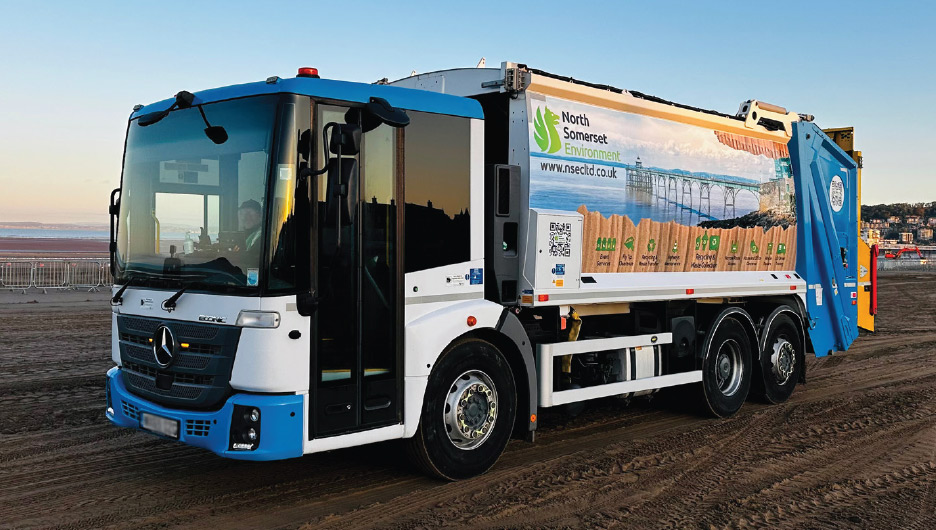
North Somerset Environment Company (NSEC) is a local authority trading company set up and wholly owned by North Somerset Council. From day one, their focus has been on delivering “reliable services, safety, and doing the right thing for our communities and the environment”. Whilst the company was primarily established to deliver services on behalf of the council, it also has certain flexibility to trade with third parties for a profit.
Challenge
Since its formation in 2021, NSEC has steadily grown its operational and commercial footprint, expanding into complementary service areas including driver training, clearance of fly tipping, commercial waste services and the delivery of council highway maintenance contracts. In October 2024, the company also successfully delivered its first major event cleansing service at the Weston Beach Race, supporting an event of approximately 25,000 attendees and further demonstrating their capability to work outside of waste collections.
Against this backdrop of growth, NSEC embarked on an ambitious programme of route optimisation aimed at improving efficiency, resilience and service quality. The journey began in February 2024 with the optimisation and rezoning of the subscription garden waste service. A critical early decision was to decouple garden waste collection days from residual waste and recycling rounds. This strategic change provided significantly greater flexibility within the modelling process and removed historical constraints that limited optimisation potential. From the outset, there was a deliberate emphasis on engaging frontline crews throughout the project, recognising that their day‑to‑day experience was essential to designing routes that would work in practice as well as in theory.
Solution
NSEC used Routeware’s market-leading EasyRoute software to support their route optimisation programme. Led by Shane Young, Project Manager at North Somerset Environment Company, the optimisation programme followed a structured, data‑led methodology.
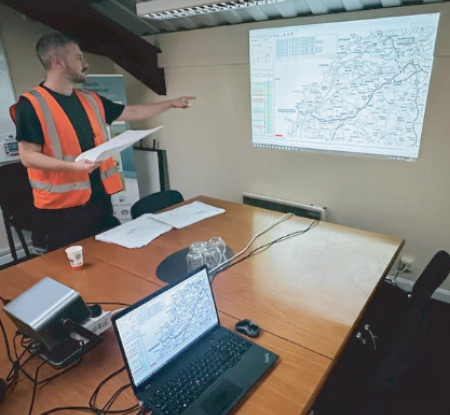
The first phase focused on building an accurate model of the current service. This involved collecting and importing a wide range of operational data including tonnages, vehicle performance, round times, property information and road constraints. Importantly, this data was cross‑checked with operational managers and crews to validate assumptions and ensure accuracy. Establishing a robust and trusted data foundation was seen as critical, as it underpinned all subsequent design stages within the EasyRoute software.
With the baseline established, the project moved into the first draft design phase. Initial routes were created within the software using the validated data and optimisation rules. Rather than treating this as a purely technical exercise, the draft routes were presented directly to operational teams, including collection crews, for review. This real‑world feedback proved invaluable. Crews were able to highlight local knowledge, access issues and sequencing challenges that are not always visible within datasets. Capturing and incorporating this feedback at an early stage significantly strengthened the quality of the emerging designs.
The project then progressed through multiple cycles of continued drafting and review. Each round of operational feedback was systematically built into the designs, refining routes towards an optimum balance of efficiency, practicality and service consistency. To maintain momentum and ensure consistent engagement, Senior Supervisor Dan Cooper was seconded into a dedicated project role. Acting as a key liaison between the design team and the wider workforce, Dan collected feedback through a range of channels and ensured that frontline voices were represented throughout the process. Dan has since assumed a new role as Operational Improvement Lead, taking the communication and collaboration deployed during this project into other areas of the business.
Once designs reached maturity, the project entered its final draft and approval stage. At this point, any remaining operational considerations were reconciled, and the software outputs were used to quantify the scale of change and its potential impact on residents. Clear visibility of proposed day changes and service impacts supported informed decision‑making. Formal sign‑off by key stakeholders marked the transition from design to implementation planning.
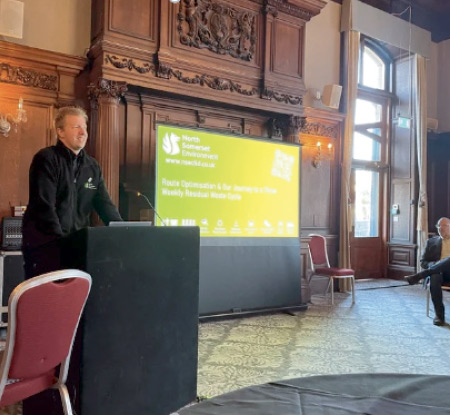
Crew familiarisation and communications were central to go‑live preparation. Detailed crew packs were produced, containing route maps, route sheets and key operational notes. At the same time, comprehensive communication plans were implemented to inform residents of any collection day changes. Drop‑in sessions at the depot enabled crews to ask questions and build confidence, while system data was prepared and uploaded to support operational readiness.
The go‑live phase was supported by enhanced on‑street and depot‑based resources. Teams monitored both old and new collection routes to identify incorrect bin presentations and proactively issued reminder leaflets where 3 needed. Detailed performance data, including round completion times and tonnages, was captured across the first three cycles. This allowed trends to be tracked as routes settled into their new rhythm and enabled evidence‑based post‑implementation adjustments where required. The project concluded with a formal review, capturing lessons learned to inform future optimisation initiatives.
Results
In 2026, North Somerset Council and North Somerset Environment were delighted to announce that they had been awarded with an iESE Certificate of Excellence for their Service Change Project. A key element of the Service Change Project was a comprehensive modernisation of NSEC’s operational infrastructure. This included the full replacement of the existing operational fleet with a brand new Romaquip fleet, all new vehicles being fitted with advanced telematics technology provided by CMS, and members of their team undertaking a detailed route optimisation exercise for our three-weekly collection rounds using Routeware’s route optimisation software, which enabled smarter scheduling, reduced mileage and greater efficiency while maintaining high levels of customer service across North Somerset. With the change to three weekly collections, North Somerset also became the first district in the United Kingdom to begin collecting soft plastics at the kerbside, something which will become mandatory for all councils in the coming years.
Conclusion
Ultimately, the success of the route optimisation programme has been driven by close collaboration between data, service design, operations, the local authority and residents. By combining robust analytics with frontline expertise and clear communication, North Somerset Environment Company has delivered a more resilient and efficient service model and laid strong foundations for continuing improvement over the coming years.
 North America
  United Kingdom